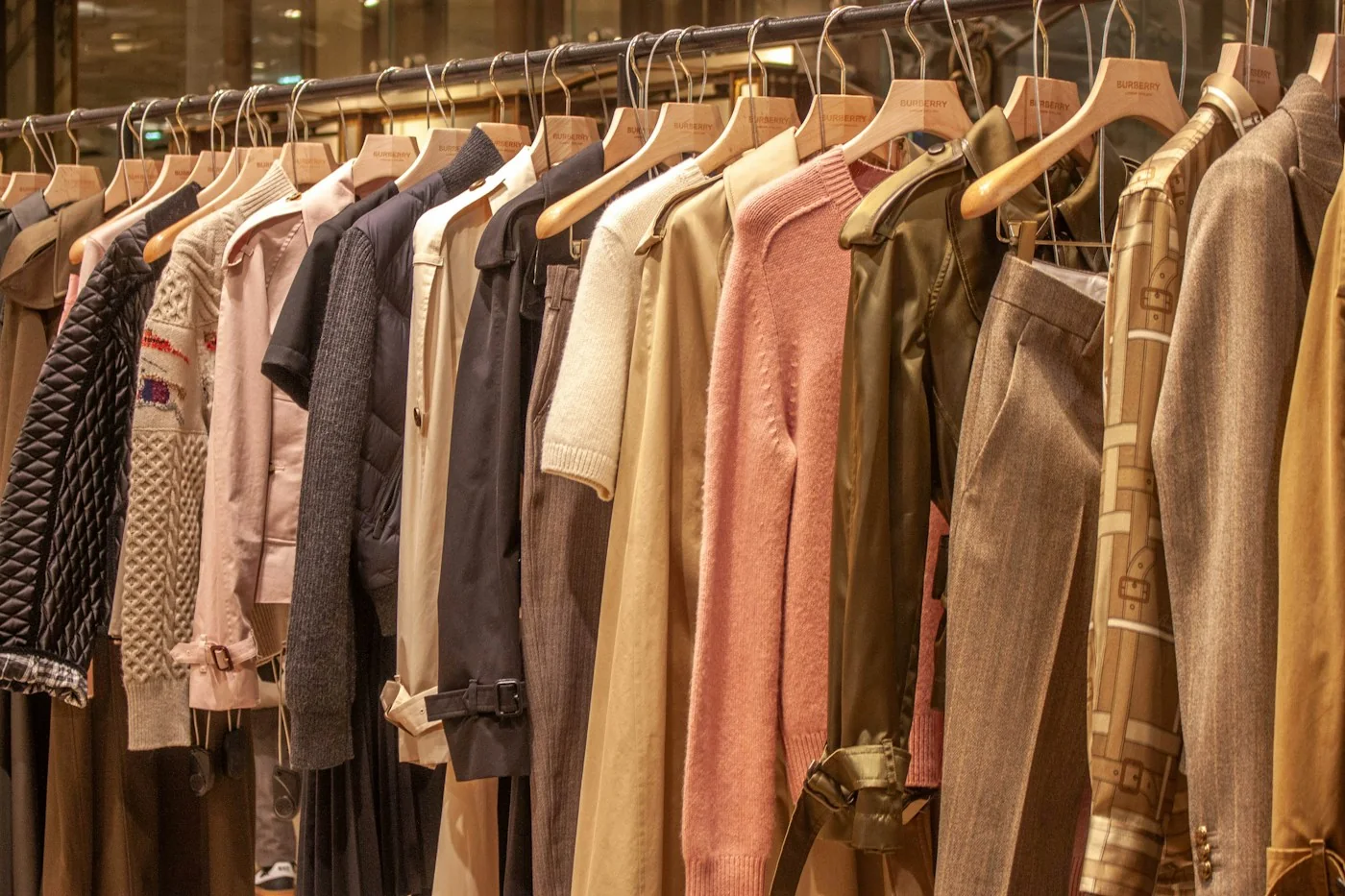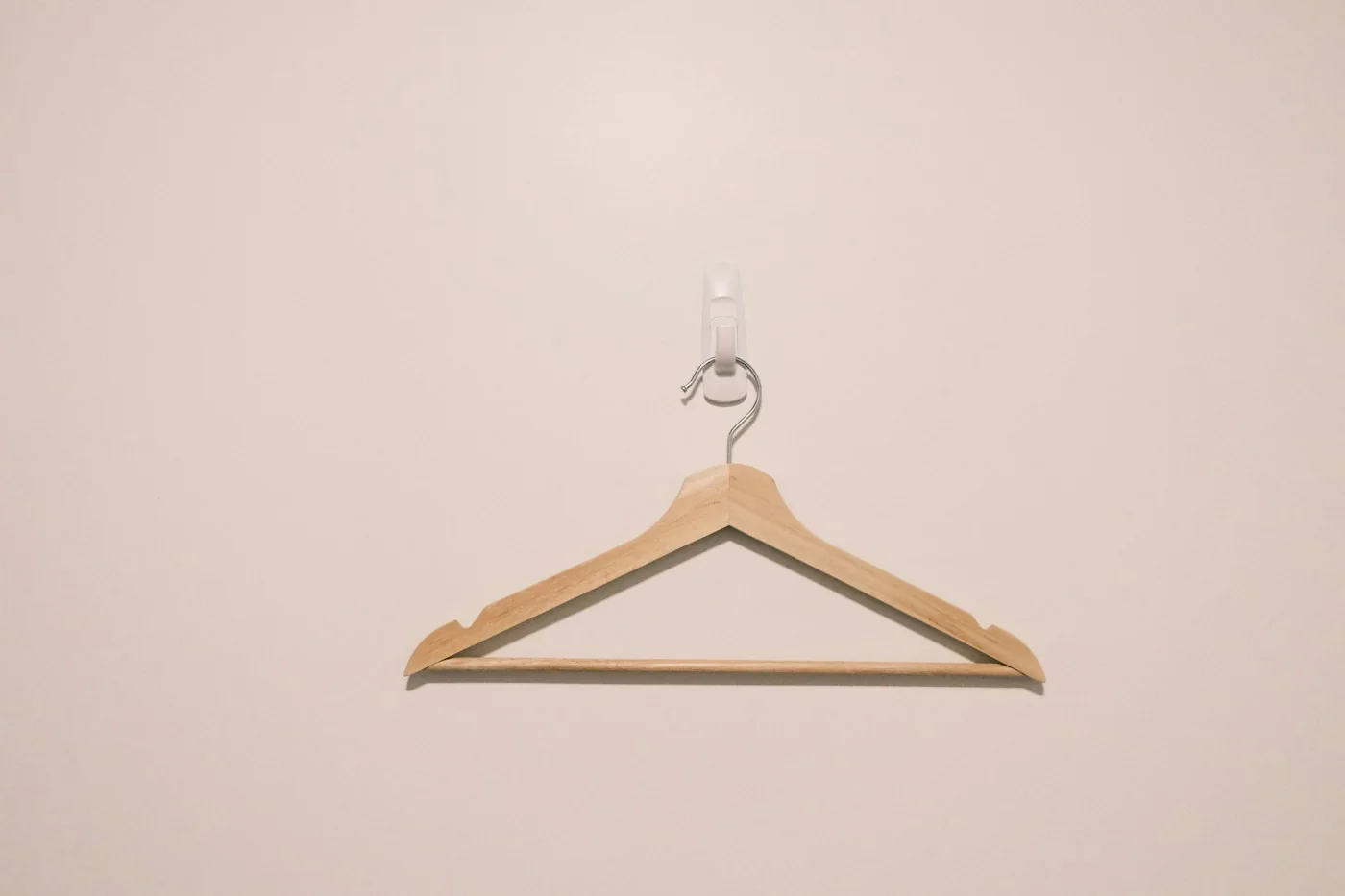
A hanger is a small support structure. Its width, curve, surface and contact points influence how a garment rests between wears. Choosing one by color or material alone can miss the detail that matters most: whether it fits the actual item.
Begin by deciding that hanging is appropriate. A heavy loose knit, a fragile old garment or a piece with weak shoulder seams may be better supported flat. Once that decision is made, select the hanger around the garment rather than trying to make the garment conform to the hanger.
Check where the shoulder is supported
Lay the garment flat and compare its shoulder region with the hanger. Ends that project too far can create bumps in the sleeve area. A hanger that is too narrow can leave part of a shaped shoulder unsupported and concentrate weight closer to the neckline.
Look at the curve as well as the width. Tailored clothing has shape, so a thin straight support may not preserve the outline as well as a suitable shaped hanger. The Sewing and Craft Alliance discusses padded and shaped support for garments that need it.
Do not infer fit from a broad label such as adult size. Garments vary, and a child's hanger is not simply a space-saving adult accessory. Try the arrangement without pulling the garment wider to make it reach the ends.
Distribute contact without adding a new hazard
Padding can spread pressure and soften an edge, but inspect the covering. It should be clean, sound and unlikely to snag or transfer unwanted material. An attractive decorative cover is not automatically appropriate for a delicate surface.
Check exposed joints, seams and hooks. A rough join can catch cloth during removal even when the main shoulder surface is smooth. Corrosion, damaged paint or a broken nonslip coating are reasons to replace or repair the hanger rather than ignore a hidden contact point.
The Canadian Conservation Institute gives especially cautious guidance for valued textiles, including suitable padding and covering materials. Everyday clothes do not all require museum preparation. The shared principle is to understand what touches the fabric and how the load is distributed.
Decide how much grip you need
Slippery garments may fall from a smooth hanger, but more grip is not always better. A strongly gripping surface can resist removal and pull a light fabric if you lift from the wrong point. Test both putting the item on and taking it off.
Use purpose-made hanging loops where appropriate and sound. Check the stitching that attaches them; a damaged loop can fail while the garment is hanging. Do not use a delicate decorative strap as a substitute without considering the weight it will carry.
Fastening a suitable button or zip can help retain alignment. Keep the closure relaxed rather than pulling the garment tightly around the support. If it only sits neatly under tension, reassess the hanger or the decision to hang it.
Consider clamps and bars separately
A skirt or pair of trousers may be held at a waistband, clipped at another reinforced area or folded over a bar. Each method creates different contact and pressure. Examine the fabric and the part carrying the load before choosing.
Clips can mark some materials. A broad padded clamp may behave differently from a narrow hard one, but neither is universally safe. Test cautiously and inspect the result after a short period rather than committing an entire season's wardrobe at once.
When folding over a bar, notice whether the bar is narrow, rough or slippery. The garment should not be crushed at a hard edge or slide until it hangs from one corner. Bulky folds and linings can make a seemingly simple arrangement uneven.
Material is a property, not a verdict
Wood, plastic and metal each appear in different hanger designs. A broad, smooth hanger and a thin damaged one can behave differently even when they share a material. Judge the actual construction instead of declaring one material the winner for all clothing.
For historic or fragile textiles, material compatibility and long-term contact become more consequential. A conservation source may reject a storage material that is commonplace in an everyday wardrobe. Do not transfer household assumptions to an heirloom without considering its condition.
Avoid scented or decorative treatments whose behavior against the garment is unknown. Fragrance is not evidence of pest control, and a varnished or painted surface should not be assumed inert simply because it looks finished.
Inspect the garment after it rests
Take the item off the hanger and look for shoulder bumps, a changed neckline, clip marks or a new fold ridge. Compare its resting shape with how it looked before storage. Also check whether sleeves caught neighboring zippers or embellishments.
If a problem appears, improve the support first. Do not rely on repeated steaming to undo an arrangement that distorts the garment every time. Some changes may not reverse cleanly, and the care label still limits treatment.
A useful hanger makes putting away and retrieving the garment easy while supporting its shape. Width, curve, contact surface and load path provide a better selection method than matching every hanger in the wardrobe. Consistency is helpful only when the underlying support suits the different clothes it is asked to hold.