The hanger is already in your hand, but that does not mean it is the best place for the garment. Storage is a support problem: the item's weight needs somewhere to go. The right choice depends on its shape, construction and condition, as well as the space available.
This guide concerns clothes that are dry and ready to store. Supporting a wet garment is a separate decision governed by its drying instructions. Putting damp clothing into a wardrobe creates an environmental problem that a better hanger cannot solve.
Follow the weight through the garment
Imagine how the item is held when suspended. Does most of its weight hang from two small shoulder points? Is there a reinforced waistband or a purpose-made hanging loop? Is the cloth around those supports sound enough for the load?
A heavy, loosely knitted sweater can distort when its weight is concentrated at the shoulders. Woolmark recommends gently folding knitted wool garments, while shaped or padded hangers are advised for woven wool clothing. This is a useful starting point, not a replacement for inspecting the specific item.
Long garments, beading, linings and other additions can change the load. Empty pockets and remove heavy accessories before deciding. An otherwise suitable method can become less suitable when a belt or pocket contents pull one section out of shape.
Match the hanger to the shoulders
Make the first choice before shopping for a support. Use these starting branches, then inspect the actual garment and available space.
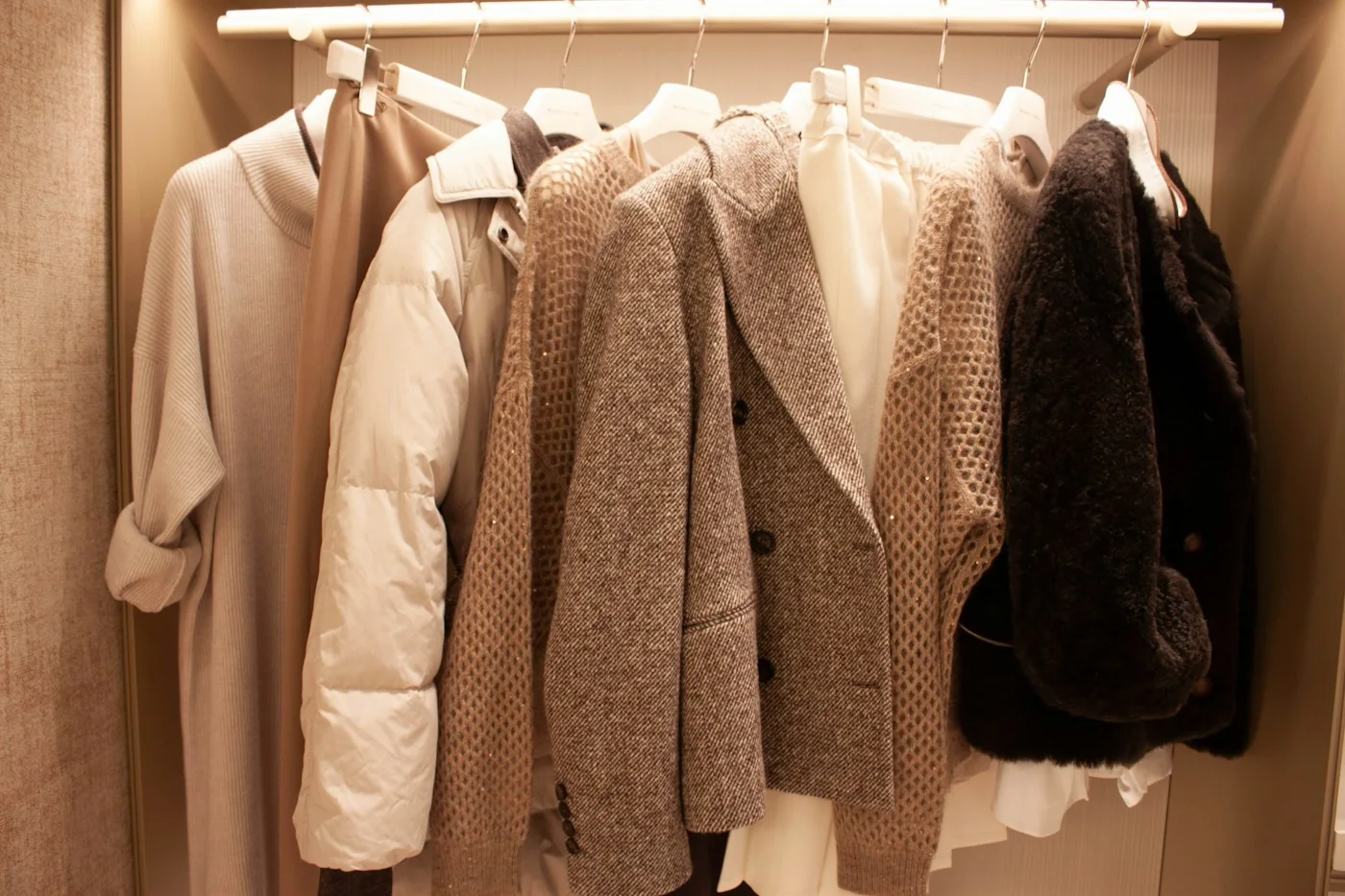
- A dry, sound structured jacket: consider hanging when its shoulders and lining rest naturally on a fitting support. The separate hanger guide covers width, curve and contact surface.
- A weighty or loosely knitted sweater: consider folded support instead of concentrating its weight at the shoulders. The knitwear-storage guide shows a practical folding sequence.
- Fragile cloth, weak attachment points or heavy decoration: pause ordinary rail storage and obtain an arrangement suited to its condition.
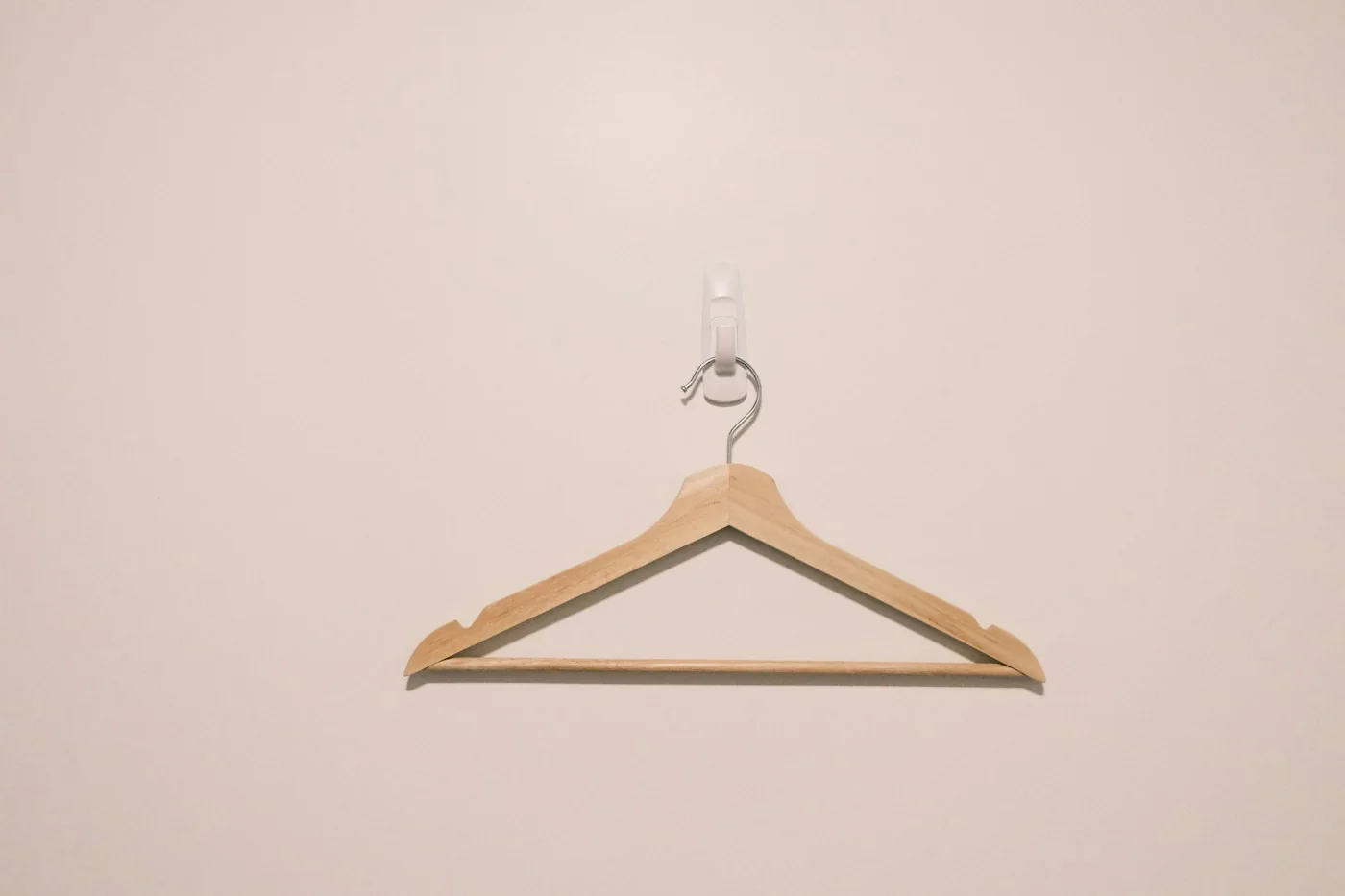
This is a support decision, not a ranking of wood, plastic and metal. A well-shaped hanger does not make an unsuitable garment hangable. If the item only fits under tension, change the support or choose another method rather than pulling it into place.
Fold without building a pressure stack
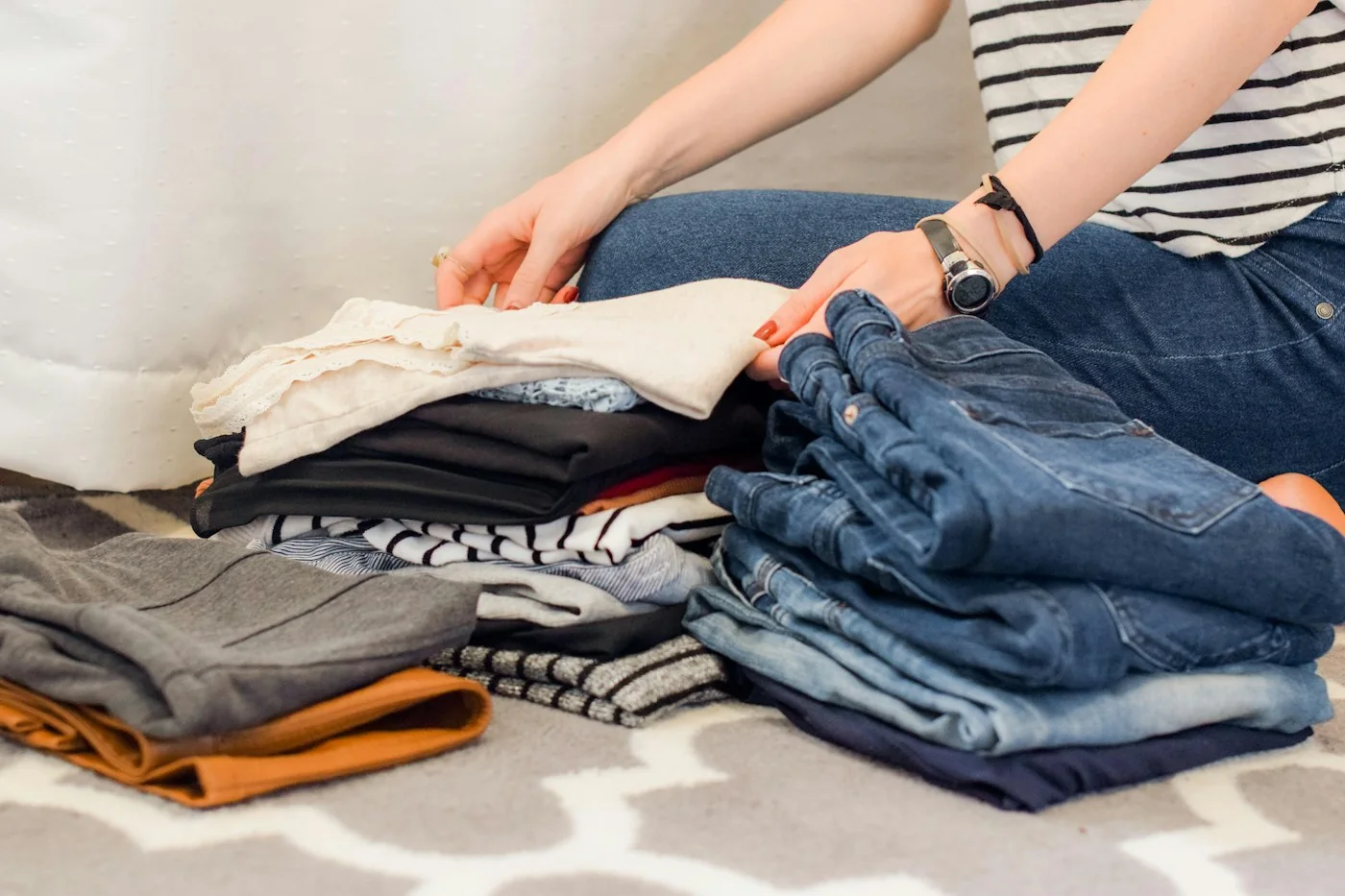
When folding, work on a clean surface and use broad, relaxed folds. Lay sleeves where they do not create a hard lump under the rest of the garment. Avoid stretching the body to fit an artificially narrow drawer space.
Keep stacks manageable. A tall pile can compress the bottom item and make it difficult to retrieve without dragging fabric against nearby hardware. The aim is not a perfectly identical stack if achieving it requires forcing different garments into the same shape.
For fragile older textiles, preservation sources favor more careful support and packing than everyday clothing may need. Do not adopt a museum folding procedure halfway, or assume ordinary tissue and cardboard provide archival protection. Valuable items may need advice on appropriate materials.
Use the garment's own features thoughtfully
Hanging loops and closures can help distribute weight or retain alignment, but inspect their attachment first. A loop pulling on a weak seam may need repair before use. Do not improvise support from a decorative strap that was never intended to carry the whole item.
Fastening a suitable closure can help a garment remain aligned on its hanger. Avoid stretching it tightly merely to make the front look neat. Tailored pieces should rest naturally rather than being held in a shape imposed by the wardrobe.
For trousers or skirts, consider whether a clamp, waistband support or broad fold is compatible with the fabric. Clips can leave marks on some surfaces. Test the arrangement and inspect it after a short period instead of treating one accessory as universally safe.
Leave room around the support
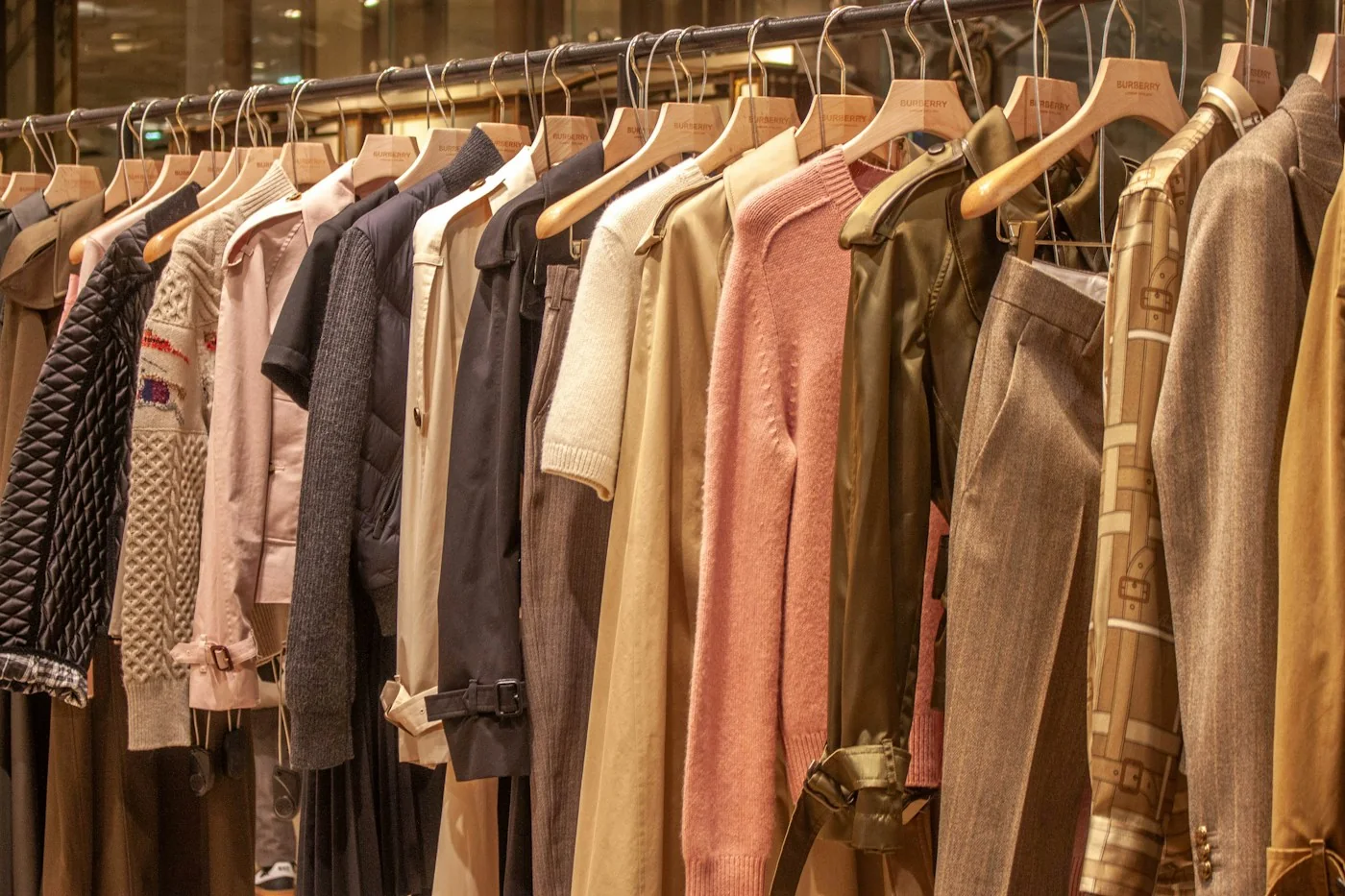
Even a well-chosen hanger works poorly in an overcrowded rail. Fabric can become crushed between neighboring items, sleeves can catch on zippers, and removing one garment can pull several others along with it.
Create enough space to lift and replace an item without force. Put particularly snag-prone pieces away from rough embellishments or exposed fastenings. In drawers, check that fabric cannot become trapped in runners or dragged across an unfinished edge.
The Canadian Conservation Institute emphasizes clean, dry storage and warns about unsuitable environments and materials for valued textiles. For an everyday wardrobe, the immediate practical lesson is to inspect the space itself, rather than assuming a tidy arrangement guarantees good conditions.
Recheck the result after use
Look at the garment when you next take it out. Shoulder bumps, a stretched neckline, sharp fold marks and snagging are feedback about the arrangement. Change the support before repeating the same storage method for months.
If you see distortion, do not assume aggressive steaming will reverse it. Consult the care label and consider the construction. Avoid adding a new treatment simply to compensate for storage that could be improved.
A small wardrobe benefits from a mixed approach: suitable structured pieces on well-fitting hangers, delicate or weighty knits folded with support, and fragile items assessed separately. The useful rule is to store the actual garment in front of you, then observe what happens, rather than assigning every item to a rail or drawer by habit.