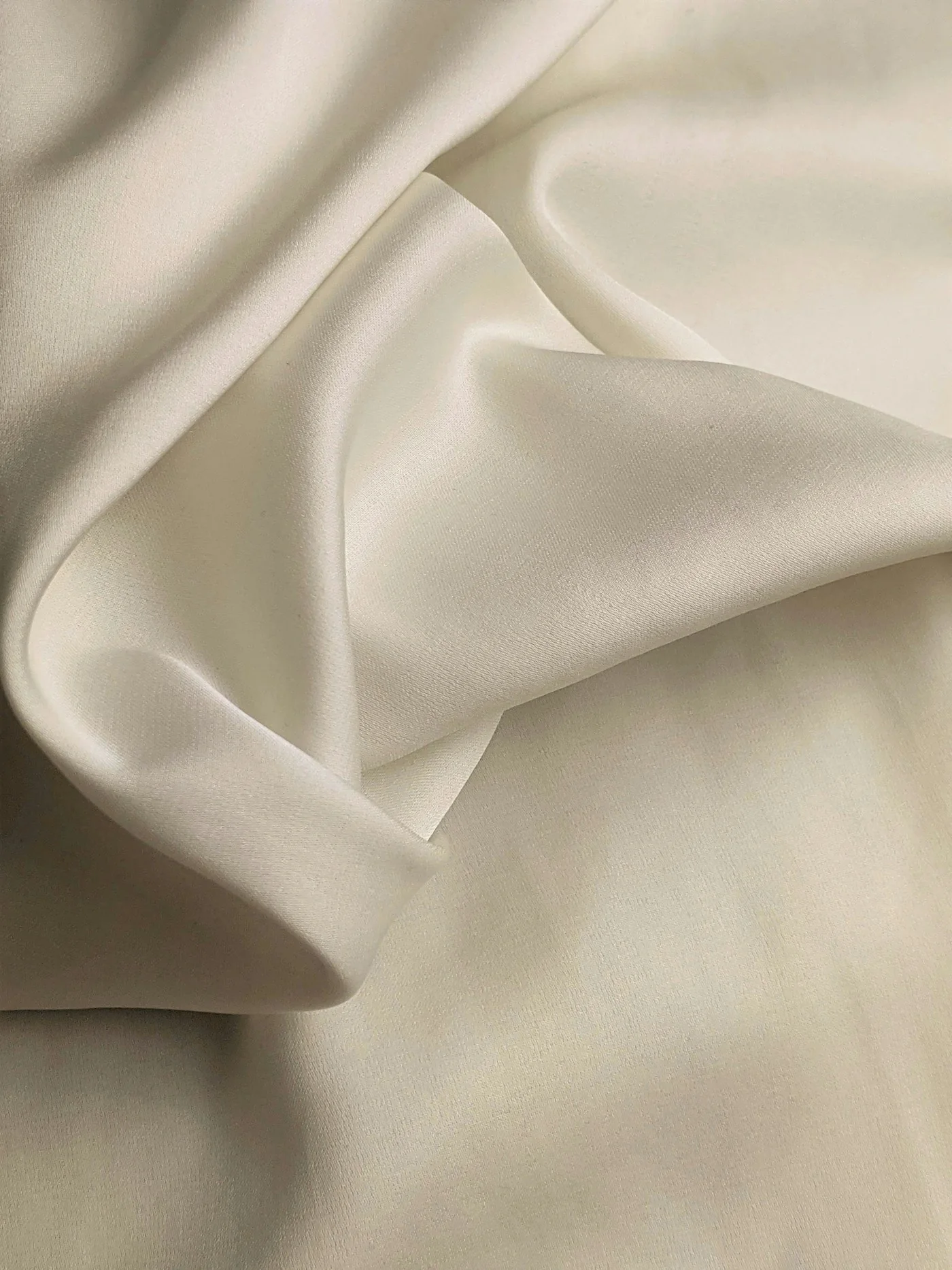
A substantial fabric can fall into soft folds, while a lighter one can stand away from the body. Weight and drape are related aspects of a textile, but they are not the same measurement. Confusing them can lead to a shirt, curtain or tablecloth that behaves differently from what you expected.
Treat mass, thickness, coverage and bending behavior as separate observations. Together they describe a finished cloth more usefully than calling it simply heavy or light. You do not need a laboratory to make a careful comparison, but you do need to keep the limits of that comparison clear.
Read mass per area correctly
Grams per square meter, often shortened to GSM, describes the mass of a defined area of fabric. It is not thickness, and it is not the total weight of a garment unless the amount of material and other components are also considered.
For an illustrative calculation, a square sample measuring ten centimeters on each side has an area of one hundredth of a square meter. If that sample weighs two grams, its mass per area is two divided by 0.01, or 200 grams per square meter.
That arithmetic assumes accurate dimensions and a suitable measurement of the sample alone. A household scale may be too coarse for a small scrap. Treat an uncertain reading as approximate rather than printing an exact specification from an unreliable measurement.
Thickness describes another dimension
Two fabrics can contain a similar mass per area while distributing it differently. A lofty surface and a compact dense structure may not have the same thickness or feel. Finishing can also change how readily a cloth compresses between your fingers.
Compare samples without squeezing one much harder than the other. Even then, a tactile observation is not a standardized thickness test. Describe the difference you can observe rather than converting it into an invented number.
If thickness affects a seam, fastening or storage space, examine the actual layered arrangement. Several folds at a hem can create bulk that is not obvious from handling one flat layer. A thin-looking fabric can still become awkward when many layers meet.
Drape concerns how cloth falls
Drape describes the way fabric bends and forms folds under its own weight. Fiber, yarn, construction and finishing contribute to that behavior. CottonWorks' woven-design guidance explains why frequent interlacings and longer floats can produce different tendencies.
Place similarly sized samples over the same support and observe their folds. Keep the support and amount of overhang comparable. Does one form broad standing curves while another collapses into smaller folds? This is a useful visual comparison, not a complete numerical drape measurement.
Turn each sample and repeat if direction matters. Woven yarn directions, bias and surface treatments can change behavior. Avoid stretching the material during the test, since that adds a force beyond the resting drape you intended to observe.
Coverage is not guaranteed by weight
Hold a single layer against the same light source and compare how much shows through. Keep color, background and layer count in mind. A dark print can create a different impression from a pale plain sample even where the structures are related.
Open constructions and dense constructions can distribute mass differently. A weight figure therefore cannot independently promise opacity. If coverage matters for a garment, inspect it in the intended shape and lighting where practical.
Do not assume a lining will solve every mismatch. It adds another material, changes the load and can alter care requirements. Assess the finished design rather than treating the outer cloth's number as the whole decision.
Compare with the intended job
For a structured garment, body and shape retention may matter. For a fluid curtain, the folding behavior and total load on its support may matter more. A tablecloth adds fit, edge drop and laundering to the comparison.
CottonWorks' sheet guide lists weight alongside fiber, yarn, weave and finishing rather than treating it as a quality ranking. Apply that same multi-factor approach to other textiles. A heavier option is not automatically more durable or more appropriate.
If you are replacing a familiar item, use it as a reference while acknowledging wear and previous washing. An old softened cloth may not behave like a new sample even when its original specification was similar.
Record the observations separately
Make four entries: stated mass per area, observed thickness, coverage and drape. Add the care instructions and intended use. Mark missing specifications as unknown rather than estimating them from a product photograph.
Ask a seller for an appropriate sample or clearer data when one property is decisive. A static image can show folds chosen by a stylist, but it cannot establish the force, support or finishing involved. A short description such as premium weight is even less precise.
Keeping the variables separate makes fabric choice more practical. The goal is not to collect the largest number or the thickest swatch. It is to understand how the actual cloth occupies space, moves and fits the task you want it to perform.