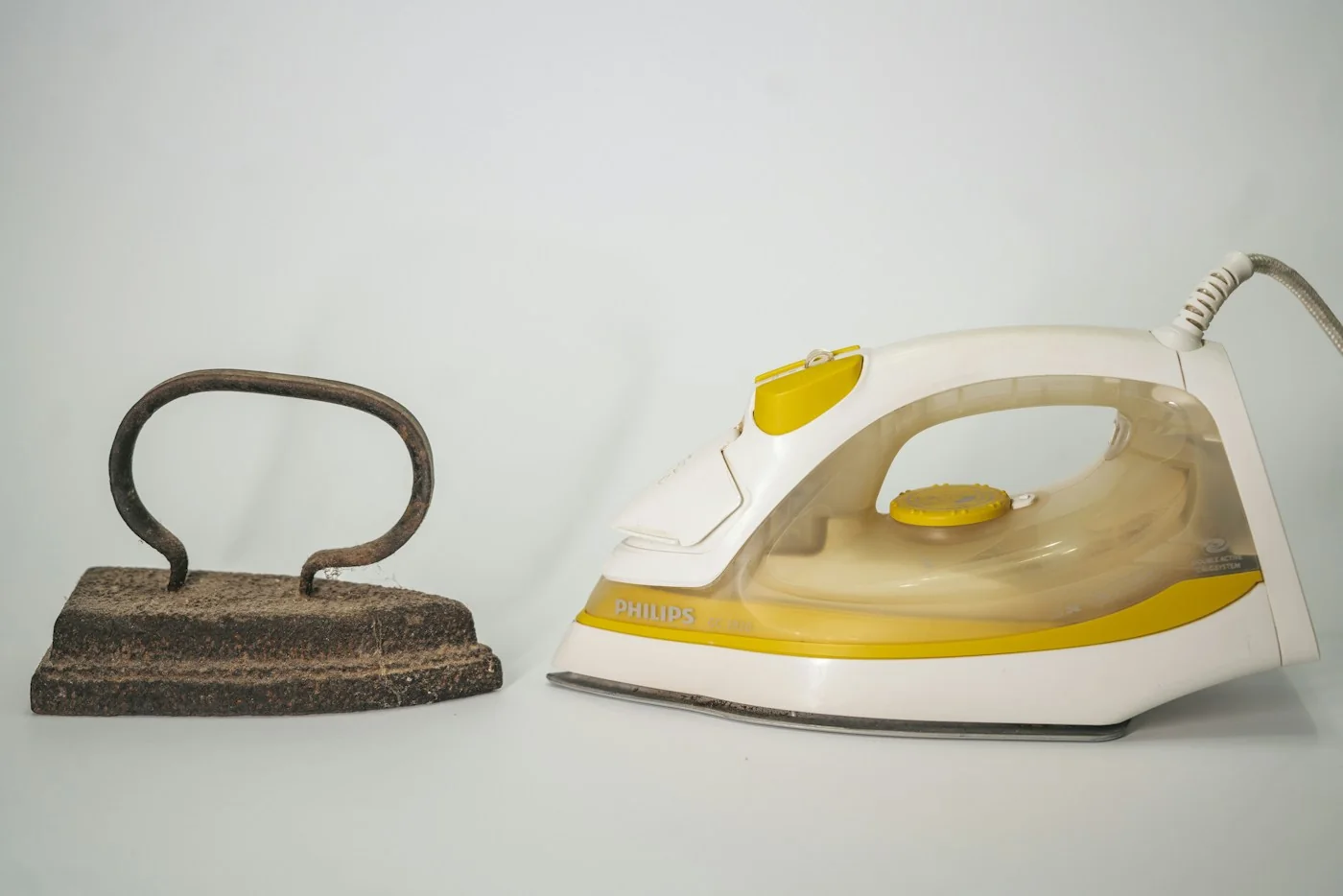
An iron and a garment steamer can both help with creases, but they do not apply heat and support in the same way. An iron typically works against a supporting surface with a soleplate and pressure; a handheld steamer is commonly used with the garment supported vertically. Some devices combine approaches.
Choose a process for the actual textile and equipment. A tool described as gentle is not a universal permission to use it on decoration, bonded layers or a delicate older fabric. The finished item's label and the appliance instructions remain the starting points.
Decide whether you need shape or a light refresh
A pressed crease, a flat seam allowance and a lightly wrinkled garment are different jobs. Pressure and a firm support can help form a defined result, while suspended steaming may suit some compatible garments where a sharply pressed line is not the goal.
That distinction does not mean one tool is always better. Fabric construction, finish and the desired appearance matter. A garment can also require no treatment beyond appropriate resting or storage.
Describe the task before reaching for heat. If the problem is a puckered repair caused by tight thread, more steaming will not correct the underlying stitch tension. Identify the cause rather than treating every uneven surface as an ordinary crease.
Read heat and steam limits separately
GINETEX's ironing guidance distinguishes temperature limits and relevant restrictions. Read written instructions too, especially around prints and trims. Permission for ironing at one setting should not be stretched into permission for any amount of steam or pressure.
Appliance settings need their own manual. A brand-specific mode or automatic-temperature claim applies within the manufacturer's stated use, including its definition of suitable fabrics. It does not authorize treatment of an item that prohibits the process.
When a label is missing or unclear, contact the maker or seek professional advice for valuable material. Touch and appearance cannot reliably disclose every heat-sensitive component. A familiar main fiber leaves other garment materials unanswered.
Prepare the whole item and support
Inspect the garment for decoration, lining, adhesives and known damage. Empty pockets and arrange fastenings so they do not press unwanted shapes into the cloth. Identify the side and area you intend to treat.
Use suitable, stable support for the appliance and process. Check the board cover or other contact surface for cleanliness and compatibility. A damaged cover or rough hanger can introduce marks or distortion independently of the heat.
Never treat clothing while it is being worn. Hot surfaces, steam and collected water can injure. Follow the appliance's handling, filling, cooling and storage directions rather than improvising a convenient position near the body.
Match the technique to the equipment
Check the actual appliance's instructions before choosing contact, distance or an accessory. This guide does not supply a model-independent steaming distance. A product-family page helps locate equipment; it does not verify one setting for an unidentified device.
For a defined trouser crease on a garment permitting pressing, arrange the cloth on suitable support and prevent the hanging weight from pulling the section you are working on. For a compatible hanging garment needing light crease removal, verify the steamer's intended support and handling method first.
In either case, keep the garment off the body, inspect sensitive trims and test an inconspicuous permitted area. If a crease is actually tight repair stitching, correct the sewing rather than applying more heat. Rest the hot appliance only as its instructions allow and switch off when finished. A device should solve the identified appearance task without concealing a construction problem.
Start with a cautious, appropriate check
Where the item and process permit it, assess a small inconspicuous area before treating a prominent section. Check for unwanted shine, color change, texture alteration or distortion after the area has settled. A test reduces uncertainty but does not guarantee every component behaves identically.
Stop if the fabric reacts unexpectedly. Do not increase temperature or repeat passes merely because the original crease remains. A resistant fold may need a different compatible process, or it may be a condition that cannot be safely removed.
Historic textiles deserve particular restraint. The V&A's conservation work on old creases involves assessment and controlled treatment, not a household instruction to apply steam. Preserving fragile material can take priority over achieving a smooth appearance.
Evaluate the result after cooling
Let the item settle on suitable support and examine it under ordinary light. Check the reverse, seams and decorated areas as well as the main face. A temporary hot, damp appearance is not the final result you will wear.
Do not infer sanitizing performance from visible steam. A hygiene claim requires an identified process, conditions and evidence that ordinary crease removal does not provide. Keep that separate from the appearance task.
The useful choice is the permitted method that achieves the intended finish without unnecessary intervention. Sometimes that is pressing, sometimes compatible steaming and sometimes better storage with no heat. Understanding the job and the limits makes the tool a controlled part of care rather than a remedy applied to every wrinkle.