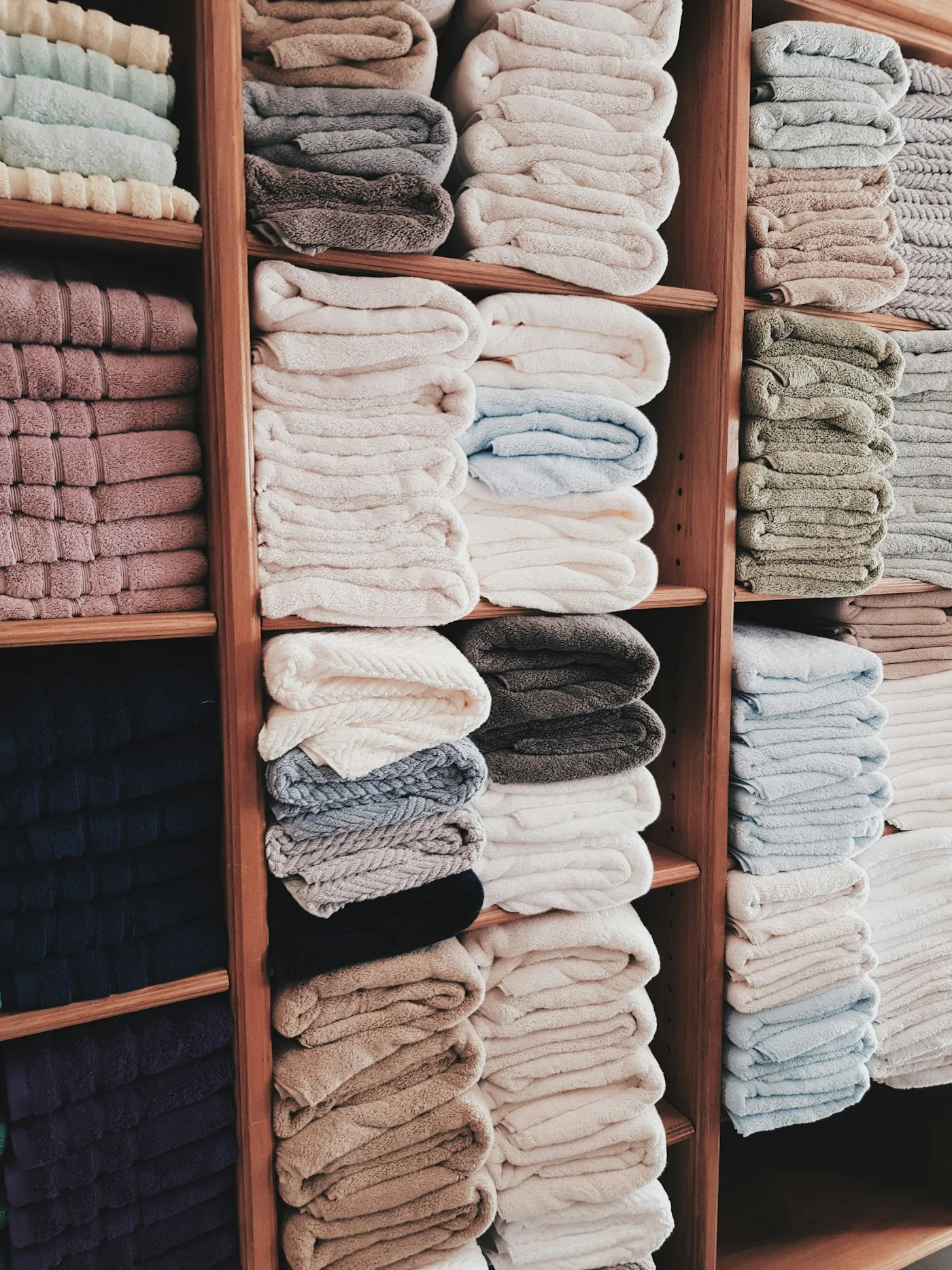
Two cotton sheet sets can have different surfaces even when their fiber labels look identical. One may feel crisp and matte, another smoother and more lustrous. Percale and sateen help describe that difference, but they are weave terms rather than grades on a single luxury scale.
Start with what you want from the actual sheet: a particular feel, manageable care and a good fit. Then use the weave as one part of the comparison. Neither name establishes that a product is best for every sleeper or will perform identically to another set bearing the same label.
What the weave changes
Percale is associated with a plain-weave construction, where yarns alternate over and under neighboring yarns. Frequent interlacing produces a different surface from a sateen construction, which places longer yarn floats on the face.
CottonWorks' woven-fabric guidance explains the broader distinction between plain and satin-family designs. Longer floats can contribute to a smoother-looking face and a different reflection of light. They can also affect how exposed yarns respond to catching or rubbing.
Those structural principles are useful, but the finished sheet includes more variables. Yarn size, fiber quality, density and finishing all influence what you feel. Two sateen sets can differ substantially, just as two plain-weave fabrics can.
Compare the hand without inventing a test
If samples are available, handle them under similar conditions. Lay each over your hand, compare the way it folds and notice whether the surface feels dry, slick, soft or firm. Describe your observation instead of turning it into an unsupported performance score.
A display sample may have been washed or handled many times, while a packaged product may retain a new-fabric finish. Ask about that difference. A quick touch cannot establish how either sheet will feel after months of your normal care routine.
Look at both sides as well. A weave can present a different face and reverse, which matters if you are choosing primarily for appearance. Do not mistake a bright shop light or a pale color for evidence of a different material.
Keep temperature claims in proportion
Percale is often marketed as cool and sateen as warmer or heavier. These descriptions can reflect familiar product tendencies, but they are not measurements of every sheet. Weave alone does not specify mass, air permeability or the effect of a surface treatment.
Your bed also includes an insert, blankets, mattress layers and room conditions. Changing a sheet does not isolate all those influences. If heat is the main concern, compare reasonably similar products and ask whether a seller's claim comes from an identified test.
Avoid medical promises about sleep or body temperature. A sheet's comfortable feel is a legitimate personal preference without being evidence of a health benefit. Choose an item that suits your experience rather than a universal sleeper category invented by marketing.
Thread count is another question
Thread count describes the number of weaving yarns in a defined area, using the appropriate counting method. It does not replace the weave name. CottonWorks' sheet guide lists fiber, yarn, weight, construction and finishing among factors affecting the finished product.
A higher number does not automatically mean a better match for you. Nor does a low count, on its own, prove poor quality. Comparisons become more meaningful when the yarns, construction and counting basis are understood.
Check that the product actually states its composition. A weave word should not lead you to assume a particular cotton variety, country of origin or fiber blend. Those claims need their own clear specification.
Read wear and care information together
Inspect the label for washing, drying and ironing limits. The weave does not authorize a particular temperature, bleach or dryer setting. Prints, elastic in fitted sheets and applied finishes can matter alongside the base cloth.
Think about your laundry setup. A product that requires a care step you cannot routinely provide may be a poor practical choice even if you prefer its surface. Check the sheet dimensions and mattress depth too; attractive cloth does not compensate for a fitted sheet that strains at the corners.
When assessing wear, look beyond a generic durability claim. Surface snags, broken yarns, seam quality and how the sheet fits your bed are distinct issues. A weave-based tendency cannot predict the life of one product without evidence about its construction and use.
Choose between two actual sets
Make a short comparison with five entries: fiber declaration, weave, observed feel, finished dimensions and care instructions. Add the price and return conditions if you are making a purchase. You can now see where the products differ and which facts remain unavailable.
If the choice is primarily sensory, an authorized sample or a clear return policy may be more useful than another adjective in the listing. If maintenance matters most, prioritize compatibility with your existing washing and drying routine.
Percale and sateen provide a helpful vocabulary for structure and surface. Use them to narrow questions, not to declare a winner before examining the sheets. The better choice is the finished product whose feel, fit and care suit your bed and your habits.