A new mark is easier to make worse than to identify. Before reaching for a stain remover, separate two questions: what might the mark be, and what can this particular item tolerate? A brown patch could be a drink, transferred color or damage. Its color alone does not select a treatment.
This guide provides an observation and handoff method for ordinary clothing and washable household linen. It is not a stain-identification test. Historic cloth, valuable embroidery, unknown coatings and items requiring professional care belong outside an improvised home experiment.
Capture the evidence before changing it
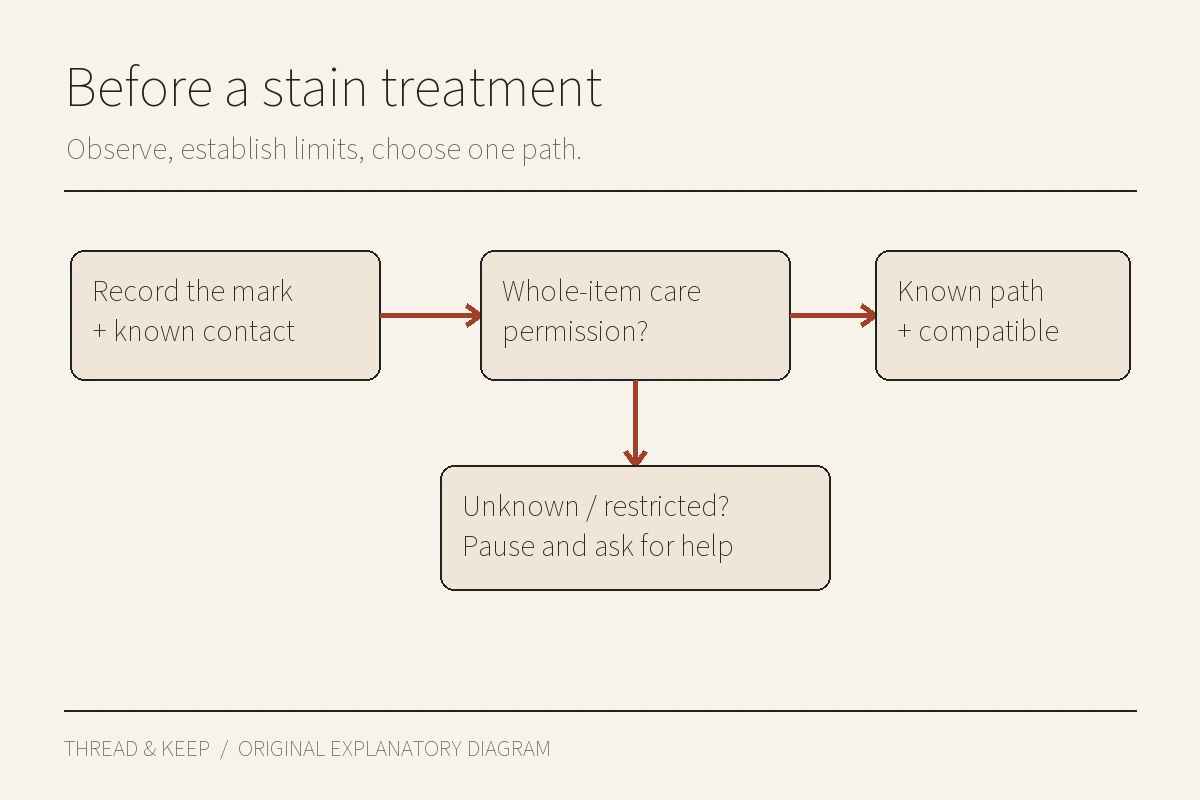
Put the item on a clean supporting surface and photograph the whole area and a closer view in the same light. Include a nearby unaffected section. Note when you noticed the mark, where the item was and whether it has already been washed, tumble dried or ironed.
Ask what actually contacted the cloth. A lunch spill with milk and oil is a different starting point from an unexplained patch after a wash. Write “unknown” when necessary. Do not turn a plausible memory into a confident chemical diagnosis.
Check the reverse and adjacent layers without forcing a lining apart. An isolated front spot, a contact-shaped patch and a change running along a fold are useful descriptions to give a cleaner. They are not proof of a particular stain family.
Read the whole item before adding water
Look for wash permission, maximum temperature, mechanical-action limits, bleach restrictions and drying instructions. GINETEX explains these as separate controls. A washable cotton outer layer does not automatically make a bonded trim or lining suitable for wet treatment.
If the label says not to wash, is unreadable or conflicts with the proposed product, pause and ask the maker or an appropriate cleaner. Do not rub an unknown area with several household ingredients to discover which one changes its appearance.
For an item eligible for a suitable treatment, check the product directions for excluded fibers, colors and finishes. A hidden-area check, where the directions allow it, can reveal a problem; it cannot guarantee that the visible patch or every layer will behave identically.
Choose one documented path
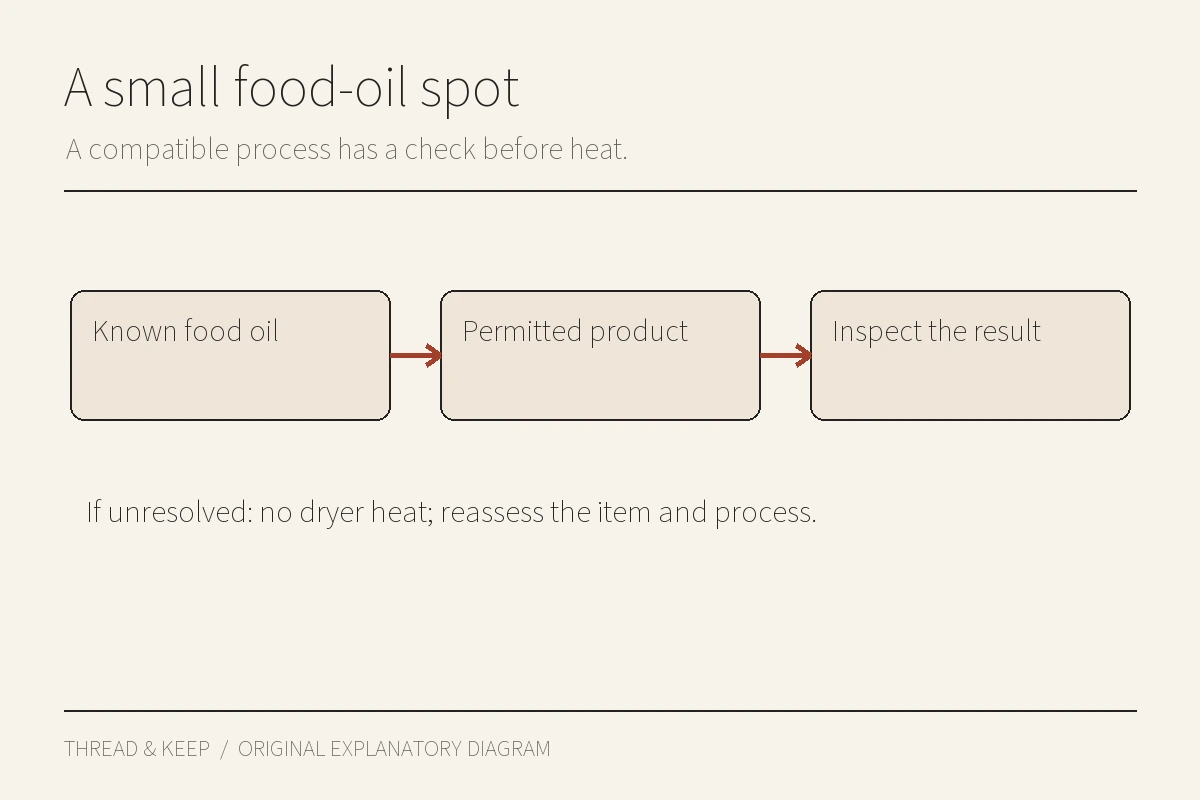
Use a product specifically intended for the known soil and compatible textile. Follow its application amount, contact time and rinsing directions. Keep a note of the product and sequence. Do not combine cleaners or improvise a mixture because the first application did not give an immediate result.
The American Cleaning Institute distinguishes stain substances and advises inspection before dryer heat. This is why one universal “brown stain recipe” is a poor plan. If you cannot establish a compatible path, preserve the item and the record for professional assessment.
Inspect before the next irreversible step
After a permitted cleaning process, compare the mark under similar light. Record whether it became smaller, changed color, spread or remained unchanged. Also inspect the cloth: a lighter, rougher or distorted patch may represent damage rather than successful cleaning.
Avoid tumble drying or ironing while an unresolved stain remains. Follow the item’s permitted drying method while awaiting advice; do not leave it bundled wet. Stop repeating a process when you cannot explain the remaining mark or see a new adverse change.
Worked example: the unfamiliar dark patch
Imagine a washable shirt with a dark mark noticed after lunch. You know it was not present that morning, but cannot tell whether the cause was food or a chair. Your useful record is the timing, location, care instructions and lack of earlier treatment. It is not “definitely oil”.
If a compatible product cannot be selected from that information, a cleaner receives a better question when the item has not also been rubbed, heated and treated with several substances. Choosing to stop with an intact record can be the most effective action.
A compact handoff note
- Item and care label: copy the actual wording, including trim or lining restrictions.
- Mark: location, extent, when first seen and known contact, with uncertainty stated.
- Treatment history: product, amount, time, wash process and any heat already used.
- Current condition: remaining discoloration, new damage or spread, with photographs.
Keep these facts together. They help you choose a bounded next step and prevent a second treatment from becoming a second unexplained problem.