A cooking-oil spot on a washable shirt needs a different decision from an unknown workshop spill or a stain on professional-clean-only fabric. Start by naming the substance and reading the item label. This guide concerns a small, known food-oil mark on ordinary clothing; it does not cover fuel, solvent, industrial oil or heavily oil-soaked textiles.
The aim is to remove soil through a compatible laundry process while keeping the cloth sound. A temporarily less visible patch is not enough to show that the problem is resolved.
Separate food soil from a different hazard
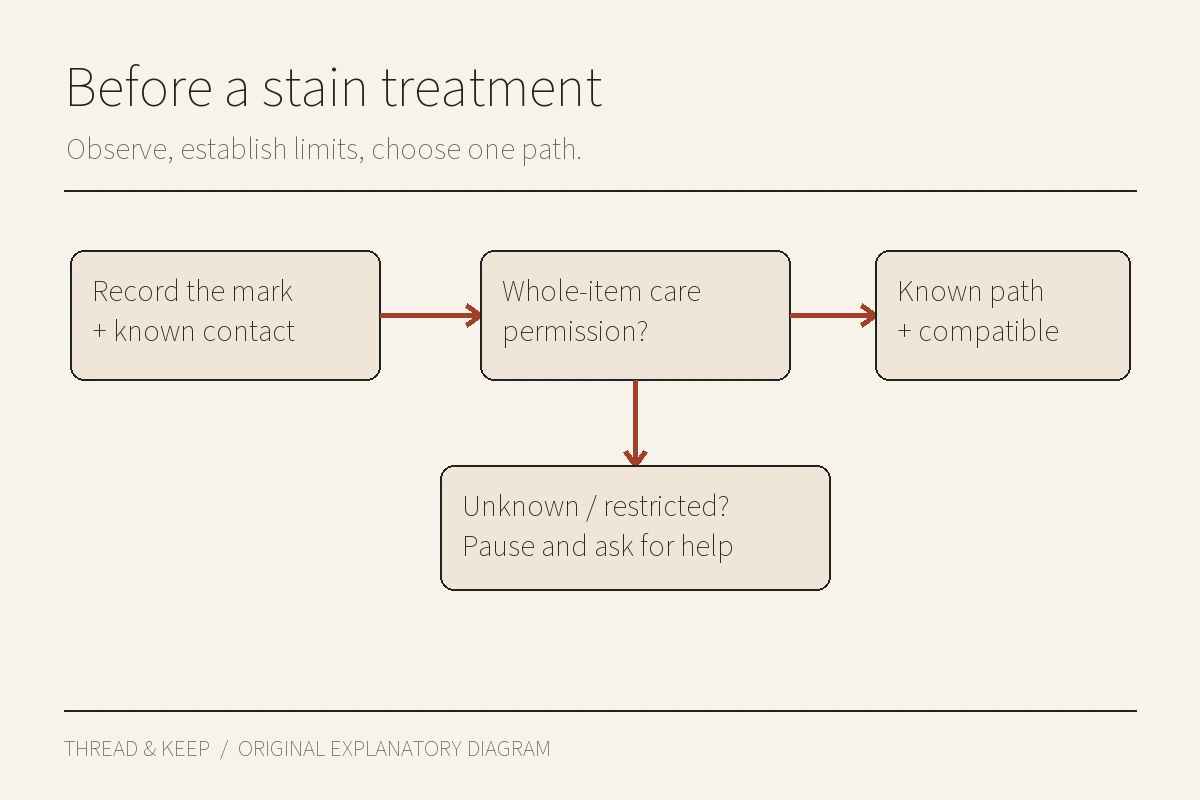
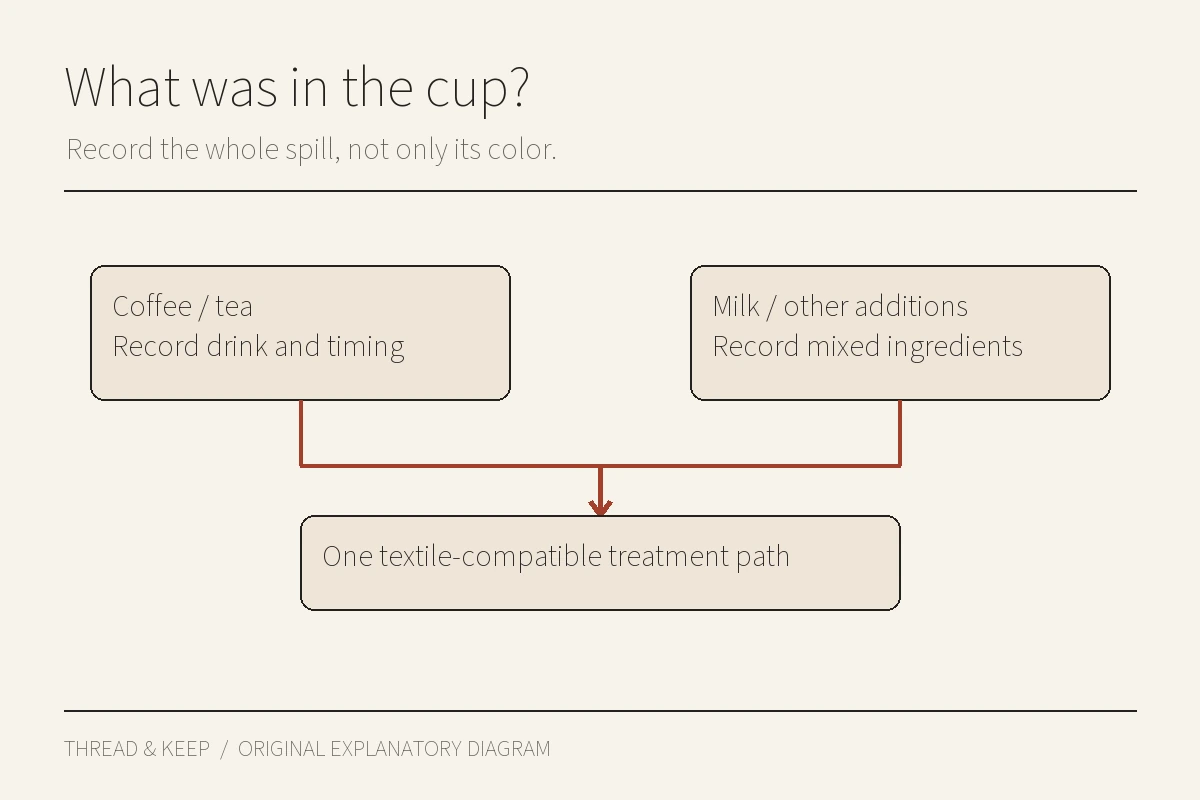
Record what spilled: plain cooking oil, butter, dressing or a sauce with several ingredients. Mixed food stains can need a different product choice from plain oil. Check how far the spill spread and whether it reached a lining or decoration.
For fuel, paint products or unknown chemicals, stop using a household laundry recipe and obtain substance-specific handling advice. Do not put contaminated items into a dryer. Large or heavily soaked spills also fall outside this small-spot workflow.
Remove loose excess without enlarging the spot
Support the area and lift any loose food gently without grinding it into the cloth. Avoid rubbing the spot out toward clean fabric or scraping a delicate surface. Keep the unaffected part away from the work surface beneath the stain.
Read the full care label next. If ordinary wet cleaning is not permitted, contact an appropriate cleaner with the identity of the food and any earlier treatment. The main fiber name does not override a finished garment’s restrictions.
Select a compatible pretreatment
The American Cleaning Institute’s grease guidance includes pretreatment with an appropriate laundry product. Kansas State’s stain guidance also separates grease from other stain categories. Neither is permission to use any solvent on any garment.
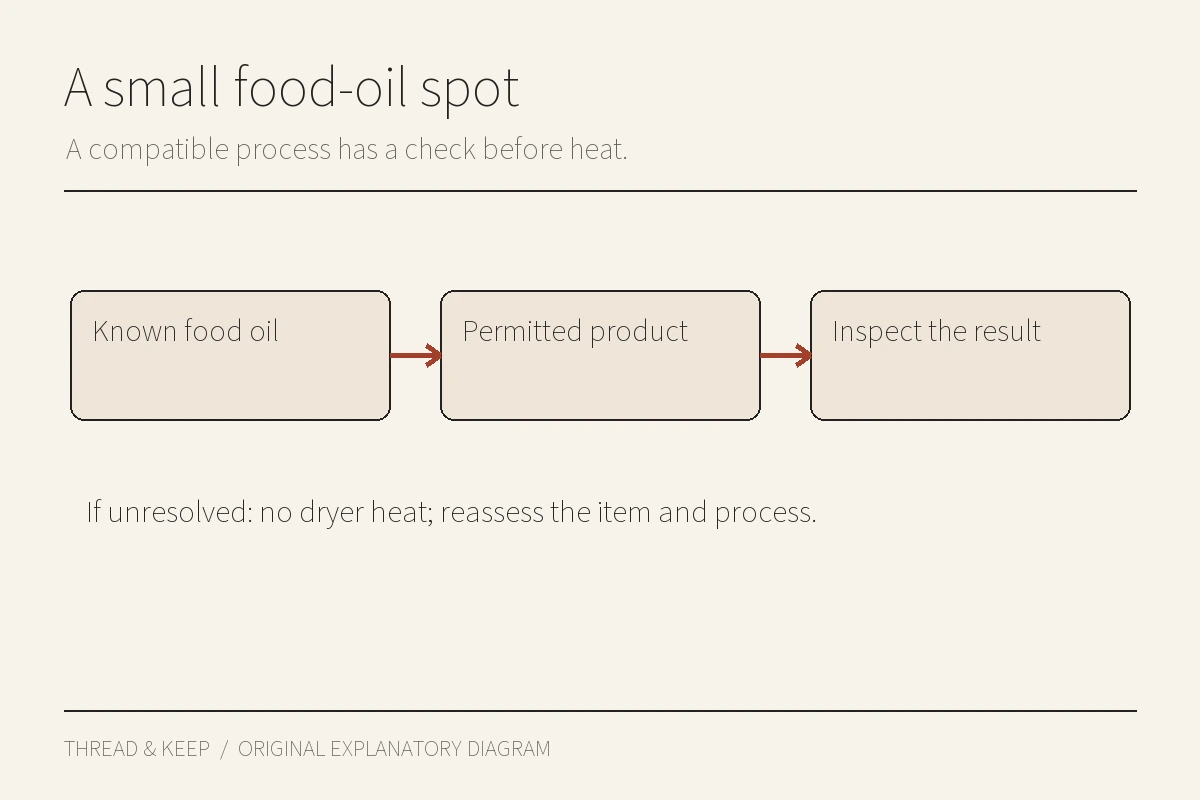
Choose a prewash product or liquid laundry detergent whose directions cover both the soil and the item. Check whether it can be applied directly and how long it may remain. Follow any permitted unobtrusive-area check. Do not assume that a concentrated detergent can sit undiluted on fabric indefinitely.
Use the specified amount and method. Do not add dish detergent to the washing machine as a substitute for a machine-compatible laundry product, and do not stack a solvent, bleach and another cleaner into one experiment.
Wash within the garment limits
Choose a program compatible with the complete item, the product and the machine. The maximum label temperature is a ceiling, not a requirement to use the hottest possible process. Mechanical action matters as well.
Keep the load manageable and avoid including other items that cannot share the process. If you are evaluating a pretreatment, record the dose and program so that an unsuccessful result can be discussed without reconstructing several undocumented changes.
Check the area before heat drying
Inspect under consistent light after washing. Oil can be difficult to judge on wet cloth. If needed, use a suitable permitted air-drying arrangement for inspection; avoid dryer heat while the mark remains unresolved. Check for a new ring or a changed fabric surface as well as the original spot.
If product instructions allow another cycle and the fabric remains sound, follow that documented option. If the mark persists, the product is incompatible or the cloth changes, stop and seek item-specific advice. Repeated treatment is not evidence that the next attempt will work.
Worked example: salad dressing on a shirt
A dressing spill may contain both oil and colored food. Write down that mixture rather than labeling the remaining ring “pure grease”. Photograph before treatment, note the chosen compatible product and compare the same area after washing.
If only a colored outline remains, you have learned that the appearance changed; you have not proved which ingredient remains. That distinction helps a cleaner advise you without an improvised bleach stage.
Keep a prevention note that changes the routine
Record the successful garment-compatible process if it worked, including the product instructions used. Keep kitchen cloths with significant oil contamination outside this small-spot example. The useful lesson is a repeatable decision for a known item, not a recipe claimed to remove every oil stain.