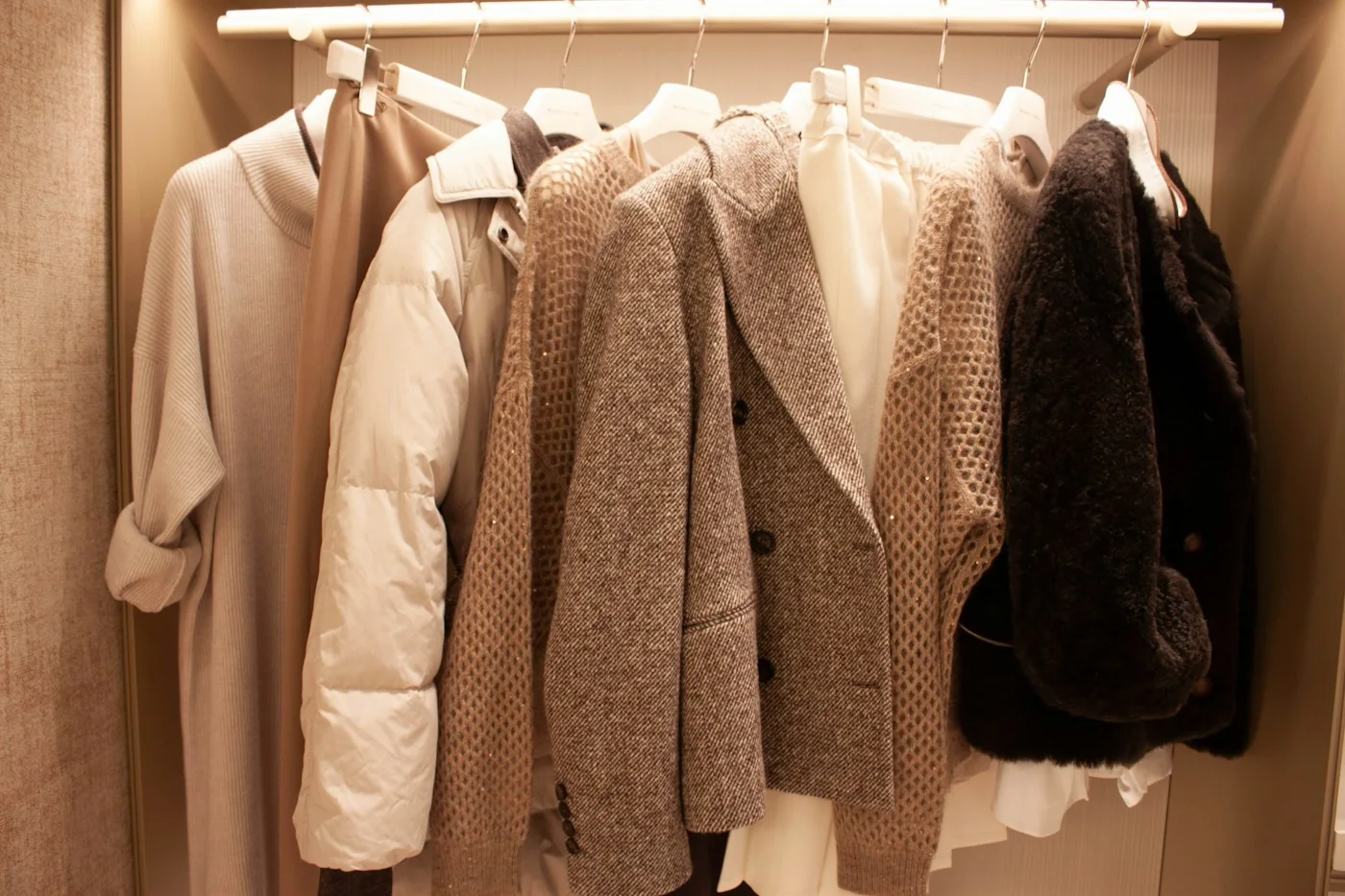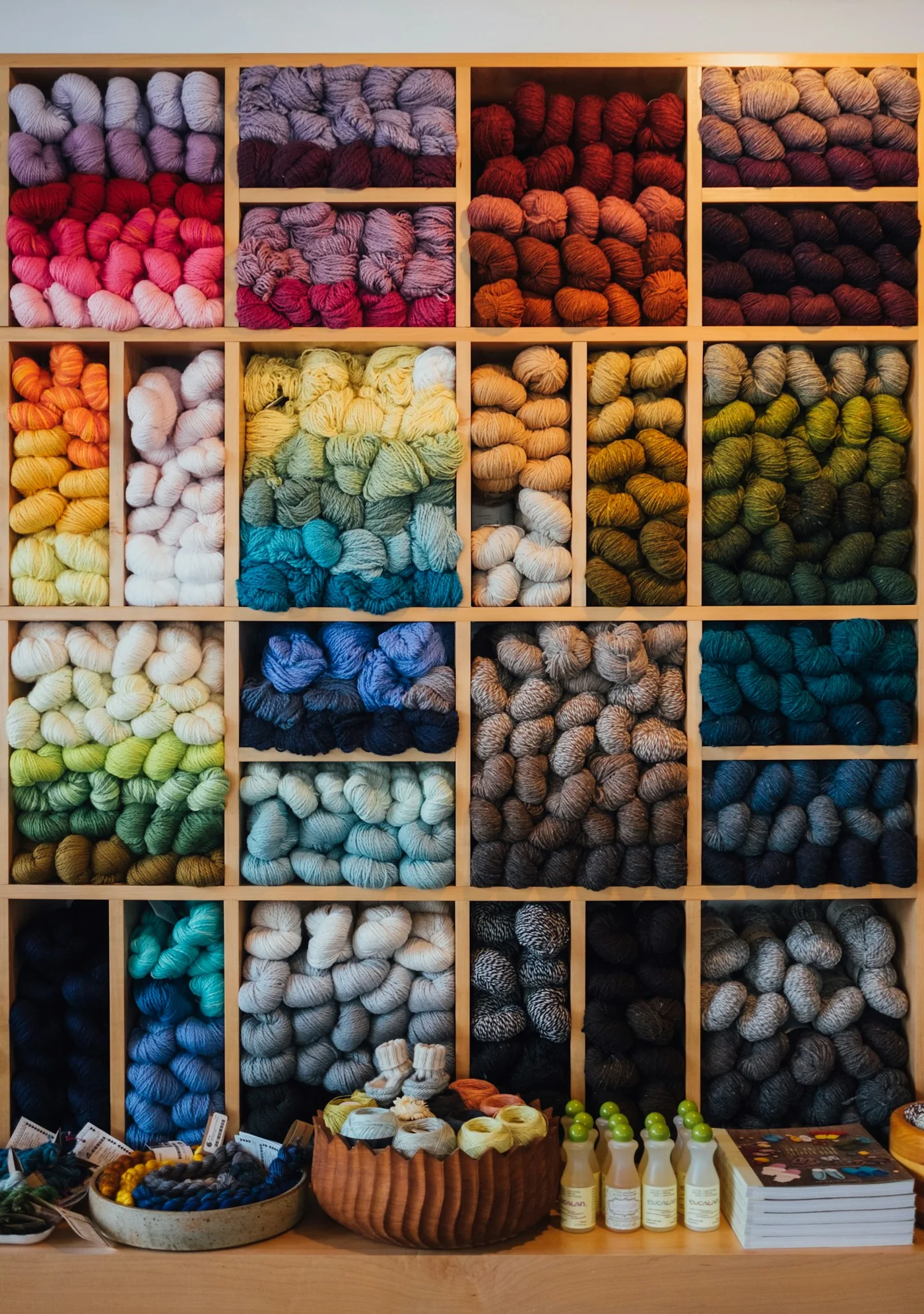
A wool sweater that emerges smaller from washing has changed dimensions, but that observation alone does not explain the mechanism. Tightened loops, a distorted drying shape and felting are not identical problems. They also do not offer the same prospects for correction.
Before trying an unshrinking remedy, preserve the evidence. Note the label, wash program, temperature, products, extraction and drying method. A useful assessment starts with what happened to this garment rather than a promise that every smaller sweater can be stretched back.
Understand felting as a structural change
Wool fibers have a scale structure. Woolmark's explanation of machine-washable wool describes how moisture and mechanical action can contribute to fibers interlocking and entangling, making a fabric denser and changing its dimensions.
This is different from a temporary fold or a garment arranged poorly while drying. A felted area can lose some of the distinct appearance and movement of its earlier structure. The change may be uneven across a garment.
The Canadian Conservation Institute's natural-fiber note identifies wool as a protein fiber and discusses its characteristics separately from plant-derived fibers. That context helps explain why a routine chosen for a cotton item should not automatically be applied to wool.
Do not diagnose by size alone
Use three questions to separate changes that can look similar. Has the yarn arrangement relaxed after stresses from manufacture or finishing were released? Has wet weight distorted the garment during drying? Or has wool become entangled into a denser felted structure?
CottonWorks explains dimensional change in terms of construction and the application or removal of stresses. That provides context for relaxation shrinkage; it is not evidence that every smaller wool sweater has the same mechanism. Woolmark's drying guidance separately explains how suspended wet knitwear can lengthen and lose shape.
Compare prior dimensions, stitch definition and the shape of individual panels without pulling hard. A shorter body with clear loops is different evidence from a thickened region with obscured structure, but observations alone may not establish a diagnosis. Record the wash and drying history for a repairer. Neither apparent relaxation nor a storage crease justifies promising that forceful stretching will restore the original item.
Read machine-washable as an item-specific claim
Some wool products receive processing intended to improve resistance to felting shrinkage. Woolmark explains that treatments can modify interactions between fiber surfaces. This helps account for why some garments permit machine washing while others do not.
It is not permission to ignore the actual care claim. A treated fiber can appear in a finished item with other materials, trims or construction limits. Drying restrictions can also remain even where a washing process is allowed.
Do not infer treatment from how soft the garment feels or from a general wool description. Read the label and ask the manufacturer where information is missing. A familiar fiber name does not disclose the whole manufacturing history.
Control the process that the label permits
Follow temperature and mechanical-action instructions together. Gently handled water at one temperature is not equivalent to an aggressive machine cycle at the same temperature. Program names and load recommendations also need the appliance manual's context.
Use a suitable product as directed and avoid adding unverified mixtures. A product intended for wool still needs an appropriate dose and process. It does not cancel a do-not-wash instruction or turn every form of agitation into a safe one.
Plan the drying stage before washing. Support wet knitwear appropriately and avoid direct heat or sunlight where the item instructions and wool guidance require it. A controlled wash followed by an unsuitable drying arrangement is an incomplete care plan.
Treat reversal claims cautiously
Woolmark describes felting as an irreversible entanglement process. A household treatment that softens or relaxes some cloth does not demonstrate that it has restored the original fiber arrangement, dimensions or strength.
Avoid forceful stretching, especially at seams, cuffs and weakened areas. Making the overall length larger can distort another section or damage yarn. A garment that can be pulled toward a measurement may still hang and behave differently afterward.
If a professional suggests a limited reshaping attempt, ask about the likely outcome and what cannot be restored. Keep cosmetic improvement, dimensional change and structural recovery as separate expectations. No single favorable photograph proves all three.
Decide what remains useful
Once the condition is understood, consider whether the garment is wearable, adaptable, repairable or suitable for a different use. That decision can preserve value without pretending the original object is unchanged. Avoid donating an altered item as though it still matches its original size label.
Record the care method that caused trouble so the same mistake is not repeated with similar pieces. If the label and your process appeared compatible, contact the maker with factual details rather than assuming either a universal fiber failure or a guaranteed product defect.
Prevention is more dependable than a promise to undo felting. Understand the permitted process, control both washing and drying, and recognize the limits when dimensions change. A smaller garment is a reason to investigate the mechanism before applying another irreversible treatment.