Stretch a shirt gently between your fingers and you learn something about its movement, but you have not yet identified its construction. Some woven fabrics stretch. Some knits are surprisingly firm. The more reliable starting point is the path the yarn takes through the cloth.
Woven and knitted describe structures, not fibers. Cotton, wool, polyester and many other materials can be used in either. Learning to recognize the structure helps you ask better questions about fit, support and repair without trying to guess a complete care process from appearance alone.
Look for crossings or connected loops
In a woven fabric, yarn systems interlace. Warp yarns run along the fabric length during weaving; weft yarns travel across them. On a simple plain weave, close inspection reveals an alternating over-and-under arrangement. Other weave patterns make the crossings less immediately obvious.
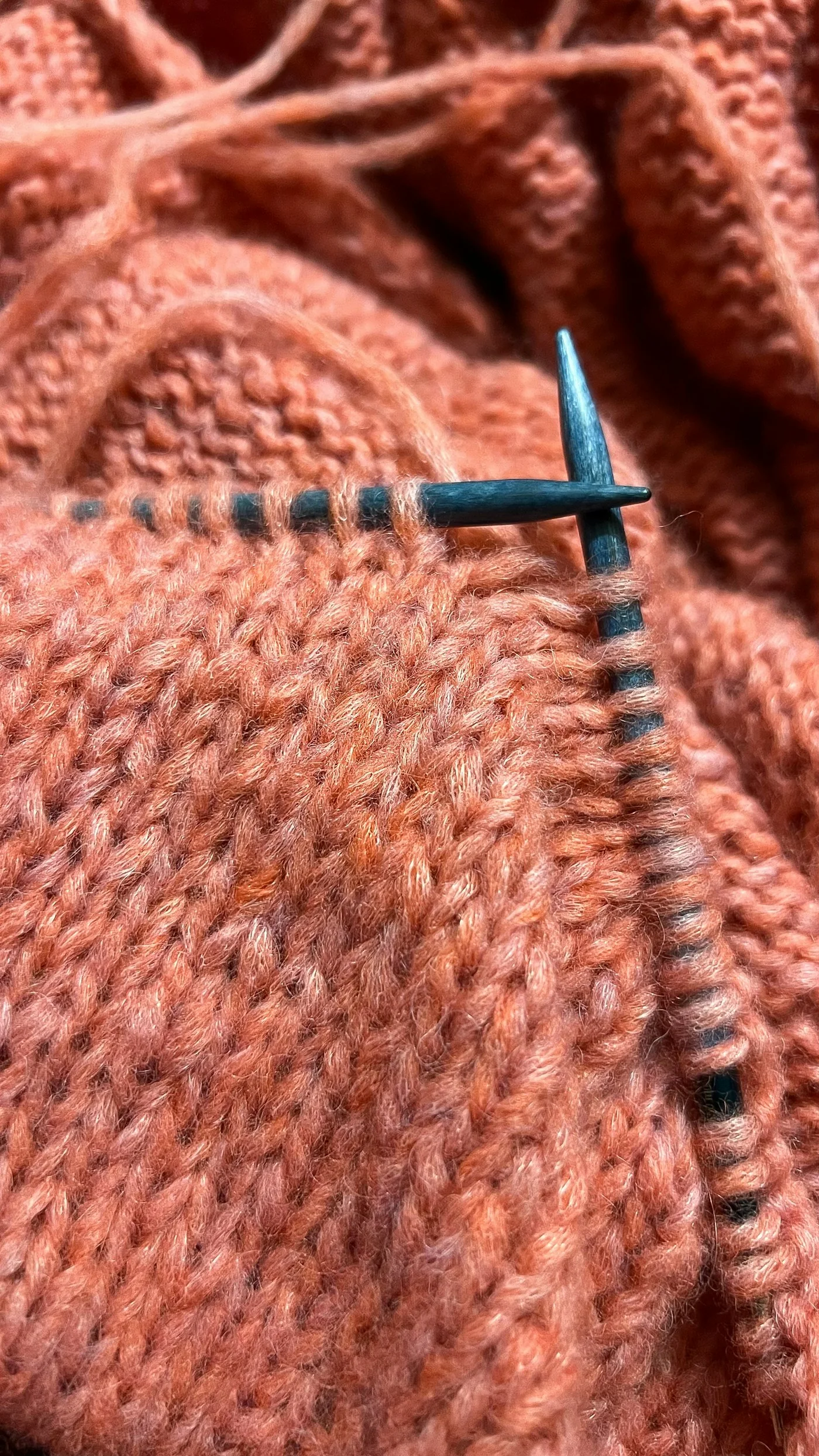
A knit is formed from connected loops. On a straightforward jersey fabric, one face often shows columns resembling small joined V shapes. The reverse can look different. Ribbing, textured stitches and double-knit structures complicate that simple visual clue, so turn the cloth over before deciding.
Use good light and, if helpful, a magnifier. Inspect an undamaged area without pulling yarns out. You do not need to cut a garment or unravel an edge to learn about its construction. Where a lining or coating hides the structure, consult the product description instead.
Use movement as supporting evidence
Gently compare movement lengthwise and across the fabric. Knitted loops can change shape as the cloth extends, which explains why many knits accommodate movement comfortably. CottonWorks describes this loop mobility as a central difference from ordinary woven constructions.
Nevertheless, stretch is not an identification test by itself. A woven fabric can include elastic yarns or a construction engineered for mechanical stretch. Even a non-stretch woven can move differently when pulled diagonally across its yarn directions.
Likewise, a firm double knit may resist extension more than a light jersey. Do not keep pulling until you obtain the result you expect. Stretch recovery, visible yarn path and the maker's description are separate pieces of information to consider together.
Learn just enough vocabulary
Courses are rows of knitted loops and wales are columns. They help describe where a snag, hole or distortion appears. Warp and weft belong to woven structure; they are not alternative names for knitted courses and wales.
The distinction is practical during a repair. A hole in a woven cloth can expose broken yarns from crossing systems. Damage in a knit can involve displaced or broken loops, with a different risk of the opening extending. The same covering patch may not respond equally well on both.
There are many structures within each family, including warp and weft knitting and complex woven designs. You can make a useful household observation without identifying every manufacturing detail. Write uncertain rather than forcing an elaborate fabric into a category you cannot substantiate.
What structure changes about support
Consider a knitted sweater carrying the weight of absorbed water. Suspending that weight from narrow shoulder points can change the garment's shape. Woolmark therefore recommends flat drying for wool knitwear unless the item's care instructions allow a different process.
This is an example of structure affecting support, not a rule that all woven clothing can be hung wet. Tailoring, linings, heavy trims and the label still matter. A lightweight woven garment and a densely lined coat have different needs.
Dry storage also deserves a separate decision. Folding a delicate knit distributes its weight differently from hanging it. A well-shaped hanger can support some structured woven garments. Choose based on the whole object rather than a single construction word.
What structure changes about repair
Before resewing an opening, check whether stitching failed or the fabric itself broke. An intact seam allowance with loose thread suggests a different job from a hole with missing cloth. That first distinction matters in both woven and knitted garments.
On stretch material, the repaired area needs appropriate movement. A rigid patch or tight straight seam can concentrate strain at its edges even when the attachment looks tidy at rest. Match the method to the fabric's movement and try it on comparable spare material first.
Do not cut a protruding knitted loop merely because it resembles a loose sewing thread. It may be part of the continuous yarn forming the cloth. If you cannot trace it confidently, stop and seek repair guidance for that construction.
Make a useful observation record
Take an ordinary T-shirt and a woven shirt you already own. Examine a sound area of each under the same light. Record the visible yarn pattern, which direction yields most easily and whether the reverse looks different from the face.
Next, read both fiber and care labels. Notice which observations agree with the product description and which questions remain unanswered. This comparison teaches more than testing unfamiliar fabric by stretching it aggressively or assuming every soft shirt is knitted.
You now have three separate entries: composition, construction and permitted care. Keep them separate. Structure helps explain movement and support, but it does not disclose dye stability, finishes or all the materials in the finished garment. The useful outcome is a better-informed next question, not a complete care prescription from one glance.