A secondhand garment may arrive without its product history, full label or original care instructions. The useful first task is to reduce uncertainty before treating it. A standard hot wash is not a universal reset for unknown dyes, bonded layers, delicate structure or existing damage.
This guide is about inspecting ordinary clothing and planning suitable care. It does not certify hygiene, pest freedom or authenticity. Suspected infestation, visible mould or unusual contamination needs an appropriate specific assessment.
Read everything before removing labels
Photograph composition, care, model details and any repair information that came with the item. Separate a shop’s description from the garment’s own instructions. “Vintage”, “linen look” and a seller’s size name do not establish materials or washability.
If the label is missing, look for reliable information from the maker using the actual model. A visually similar current product may have different components. Keep unresolved care instructions unresolved rather than borrowing a recipe from an image search.
Inspect while the garment is supported
Check shoulders, underarms, cuffs, seat, hems, fastenings and accessible lining. Note tears, open seams, thinning cloth, pulled loops and previous repairs. Photograph the state before deciding which intervention comes first.
Look for unusual debris or possible pest evidence without shaking it through the wardrobe. Keep a suspect item apart and seek identification. Do not translate one hole into an insect diagnosis, or assume a pleasant smell proves that nothing needs attention.
Check fit before changing dimensions
Where condition and circumstances permit ordinary fitting, assess movement, fastening strain and coverage. Record relevant garment dimensions flat using named endpoints. A care process should not be used as a speculative sizing service.
Separate simple alteration questions from damaged fabric. Taking in a sound garment differs from trying to disguise a broadly stretched or weakened panel. Do not commit to a repair solely because the purchase price was low; include the cloth’s remaining condition and the work required.
Choose a care path for the whole garment
Read washing, drying, bleaching and finishing restrictions together. Include linings, coatings, decoration and any replacement components. If the full construction cannot be assessed, ask the maker or a suitable cleaner before wetting or applying heat.
For an item with a documented compatible process, use the actual product and appliance instructions. Keep unfamiliar saturated colors separate from vulnerable pale items and inspect before heat drying. This is prudent sorting, not proof that all dyes or contaminants are controlled.
Complete drying before wardrobe entry
Prepare the permitted drying support in advance. Inspect cuffs, seams, waistbands and the underside, not just the exposed face. Store only a suitable clean, fully dry item in a suitable dry place.
Canadian Conservation Institute guidance explains why support, moisture, light and pests matter to textile preservation. Historic or significant pieces need a preservation decision, which may differ from getting a modern everyday shirt into rotation as quickly as possible.
Worked example: an unlabeled lined skirt
Imagine a skirt described as wool by the seller, with a lining and no readable care label. You can record the construction and condition, but the seller’s fiber description does not establish the care of the assembly.
Obtain a suitable cleaner’s assessment before trying a wash. Bring photos, any model details and a note of prior treatments you know about. If there is no reliable history, say so. That is more useful than calling it “probably washable” and asking for help only after the lining and shell change differently.
Keep a small item record
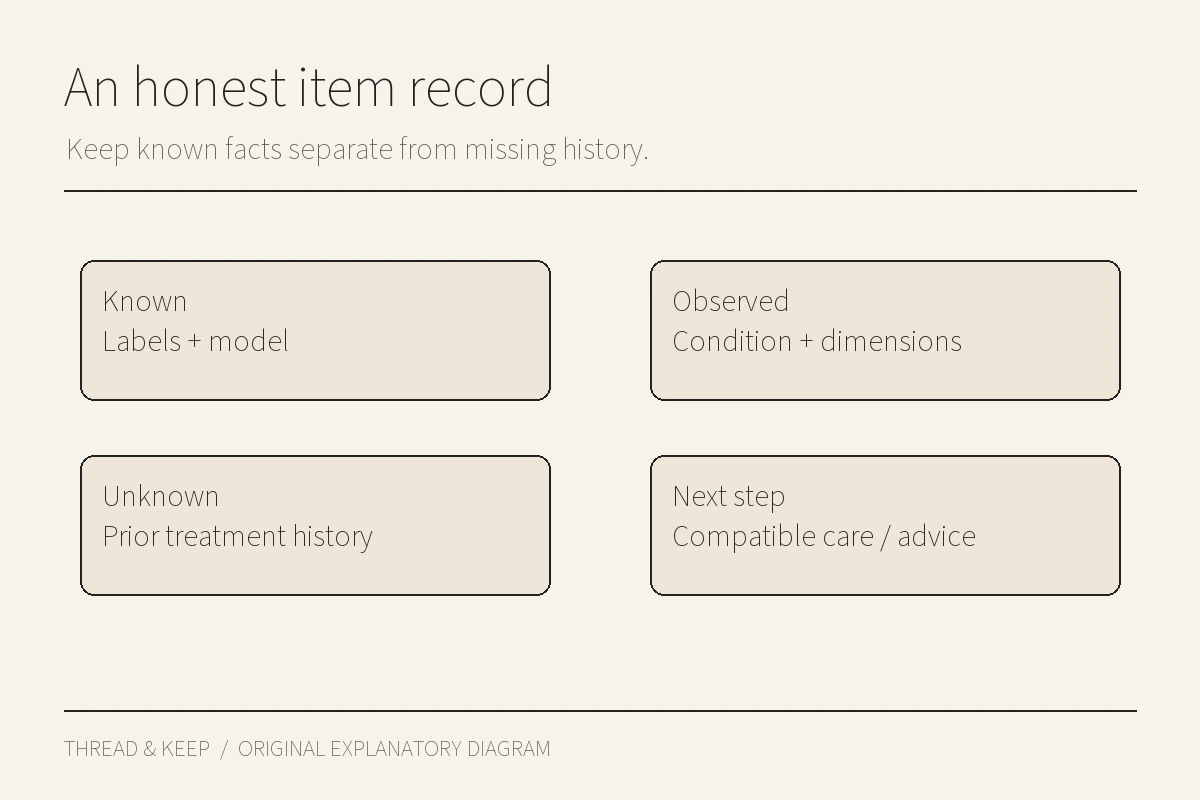
- What is known: labels, model information, dimensions and visible condition.
- What remains uncertain: treatment history, materials or specific care limits.
- What was done: a documented compatible process or professional assessment.
- What to check next: fit, repaired areas and the result of the next permitted care cycle.
The result is an item you understand well enough to use and maintain, or a clear reason to pause. Neither outcome requires inventing a history the garment did not provide.