A sweater that seems longer after care may have changed shape, relaxed differently or simply been measured in another way. Begin with repeatable observations. A tape measure is useful when it records the same points under the same conditions; it is misleading when a damp hanging garment is compared with an old flat measurement.
This guide helps document a change and choose a question. It does not diagnose felting, promise unshrinking or provide a forceful blocking method for an unknown knit.
Make a dry, supported starting record
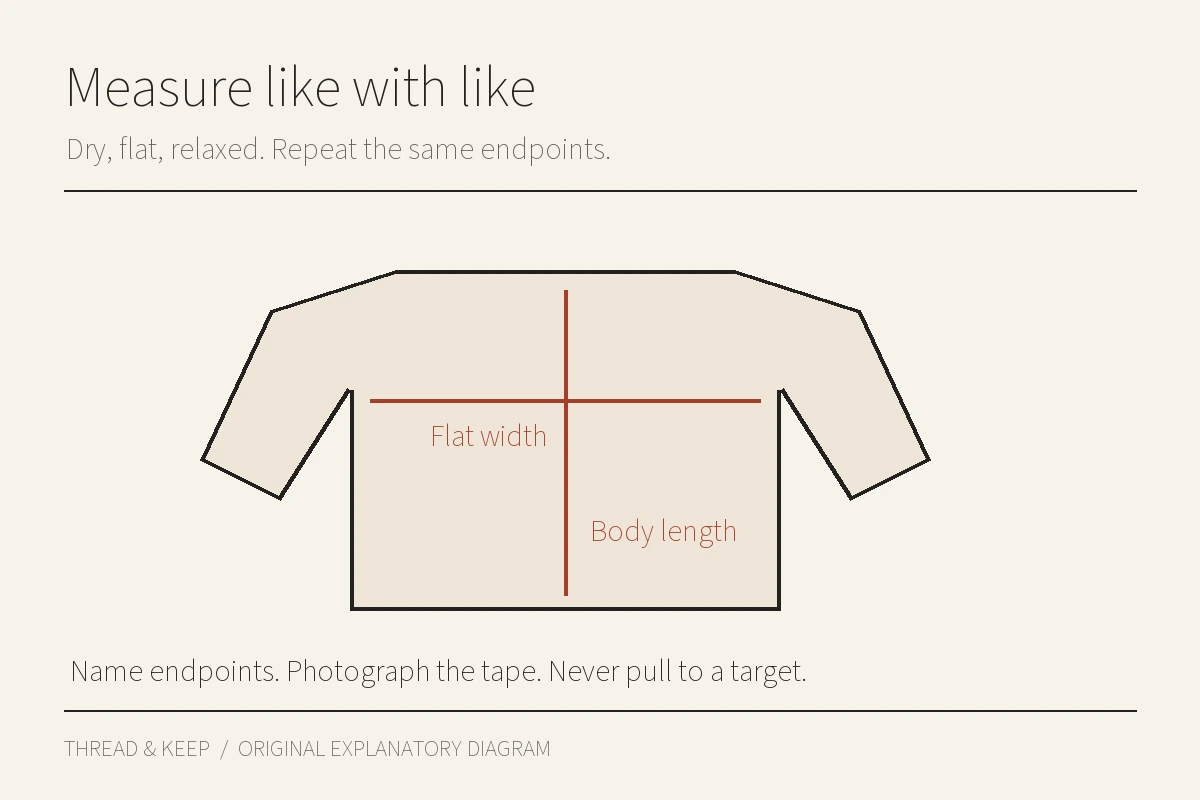
Lay the dry garment on a clean flat surface in its natural outline. Do not stretch it until it matches a size chart. Close fastenings as normally worn where doing so does not distort the item.
Choose points you can find again: body length from a named shoulder point, chest width between named seam positions, and sleeve length from a clearly identified seam. Photograph the tape and endpoints. Note whether each dimension is a flat width or a circumference; they are not interchangeable.
If you have no earlier record, say so. A product chart may describe body measurements or a different garment measurement method. It is context, not a missing before photograph.
Inspect structure separately from outline
Compare the affected and less affected areas. Note shoulder protrusions, uneven length, compacted texture, changed stitch definition and obvious breaks without pulling to test strength. A photograph preserves those clues for the maker or repairer.
A smaller garment does not by itself establish felting, just as a longer one does not prove a particular washing error. Keep the observations and your possible explanations in separate notes. Do not use a vigorous stretch test to force a conclusion.
Reconstruct the process you actually used
Copy the garment’s full care instruction and record product, program, temperature setting, spin and drying support. Include the period spent wet and whether the garment hung from its shoulders. Keep the machine’s setting name separate from an actual measured temperature if you did not measure one.
Woolmark explains that wet weight can lengthen unsupported knitwear during hanger drying. This supports a question about support, not a guarantee that every long sweater will return to its previous dimensions after rewetting.
Decide whether another intervention is justified
Read any manufacturer guidance for reshaping that exact garment. If it permits gentle shaping during its normal drying process, stay within those directions. A family recipe involving conditioner, extra heat or substantial pulling is not a substitute for item-specific permission.
Do not repeat wet treatment solely to see whether the size can be changed again. Stop if the structure looks denser, fragile or uneven, or if the proposed method conflicts with the label. Seek a qualified assessment for valuable or specialist pieces.
Worked example: compare like with like
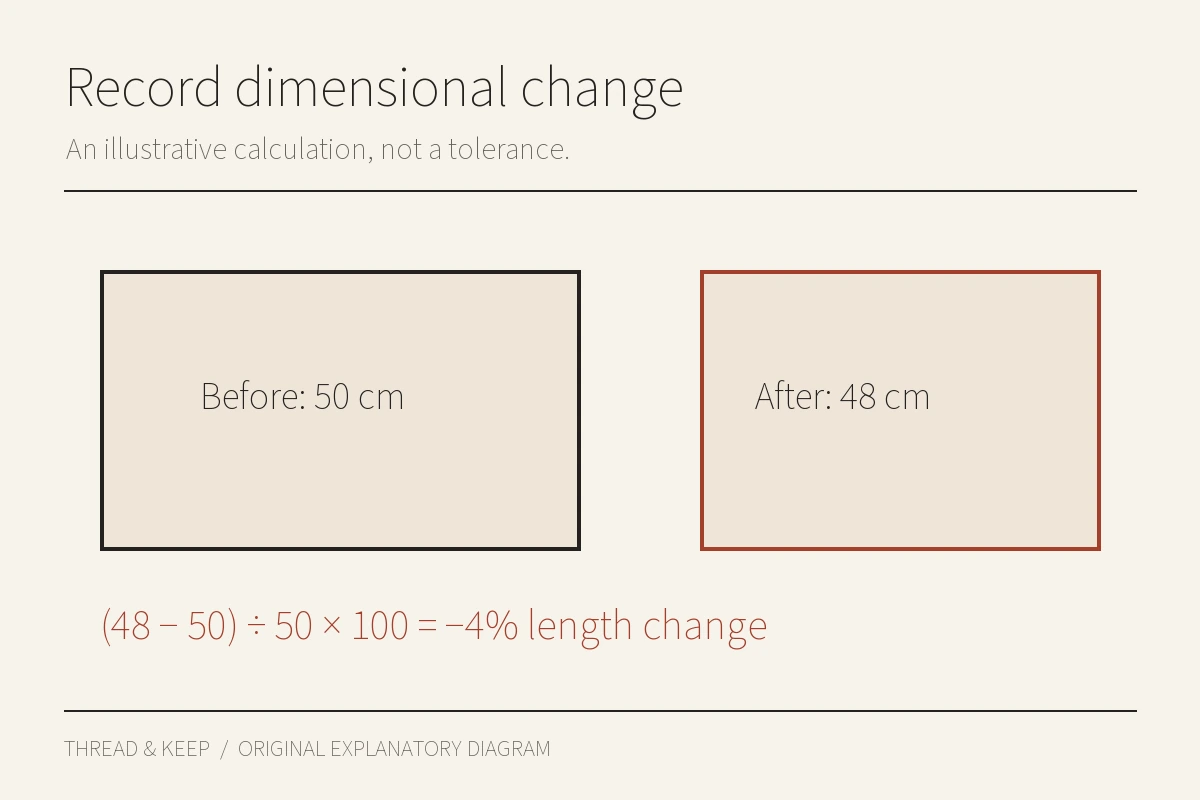
Imagine an earlier flat body-length record of 60 cm and a later dry, flat record of 63 cm using the same endpoints. The measured difference is 3 cm, or 5 percent of the earlier length. This is an illustrative calculation, not an acceptable-change standard.
A 63 cm measurement taken while the sweater hangs wet cannot be substituted for the second flat record. Nor does that one dimension describe changes in chest width or sleeve shape. Keep each direction separate so the evidence remains interpretable.
Use the record to prevent repetition
Write down the permitted support arrangement and reserve the necessary drying space before the next appropriate care cycle. Check the garment while moving it and during storage so the same shoulder load is not reintroduced.
Your outcome may be a corrected routine, a repairer’s assessment or a decision to use the garment differently. A trustworthy measurement record helps all three without promising reversal of a structural change.